Last updated November 23, 2026
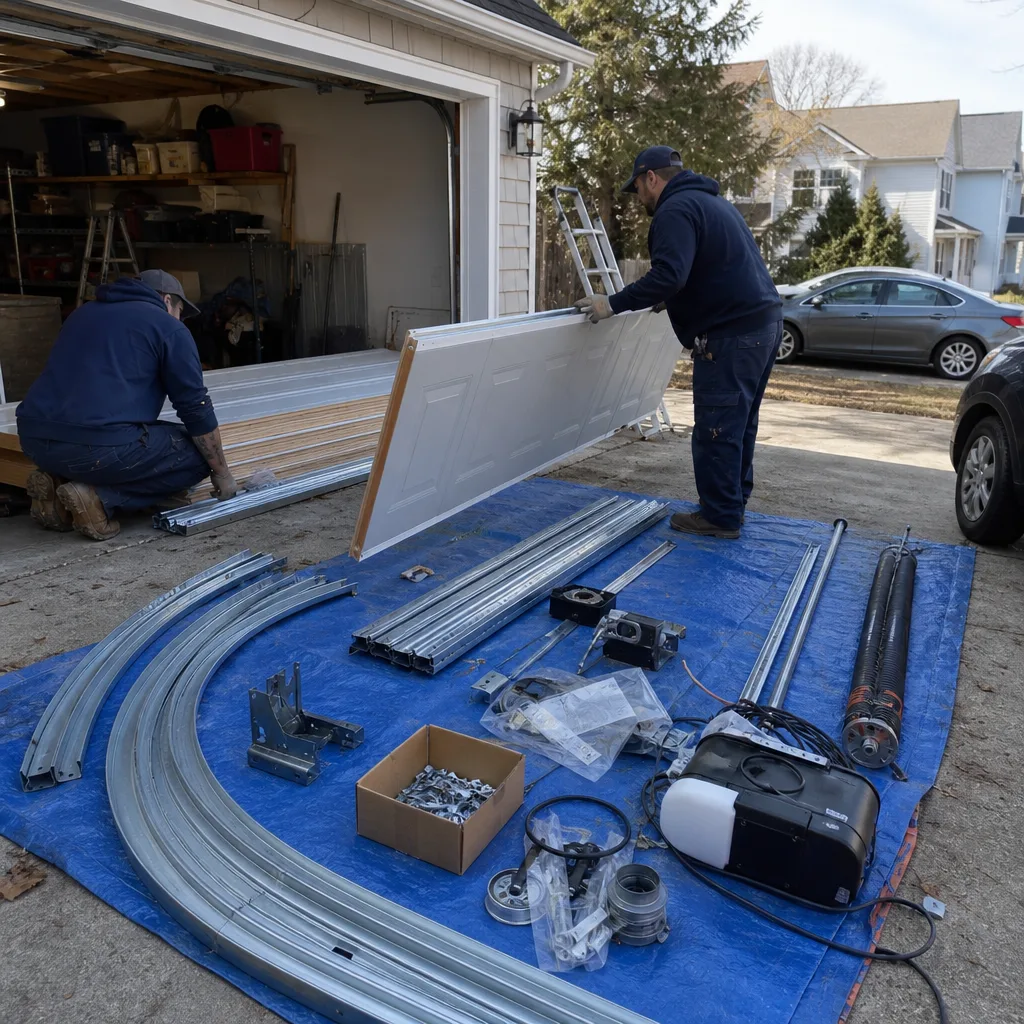
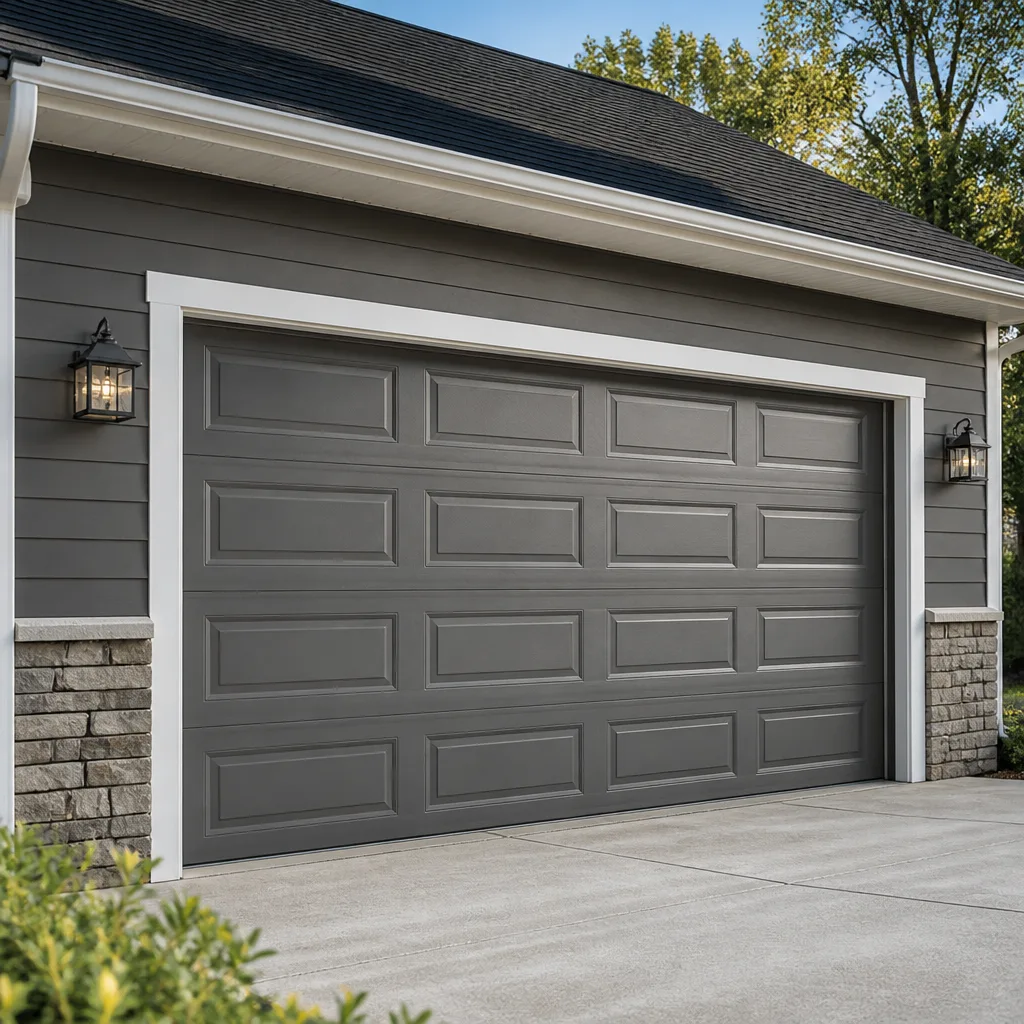 Raised-panel steel
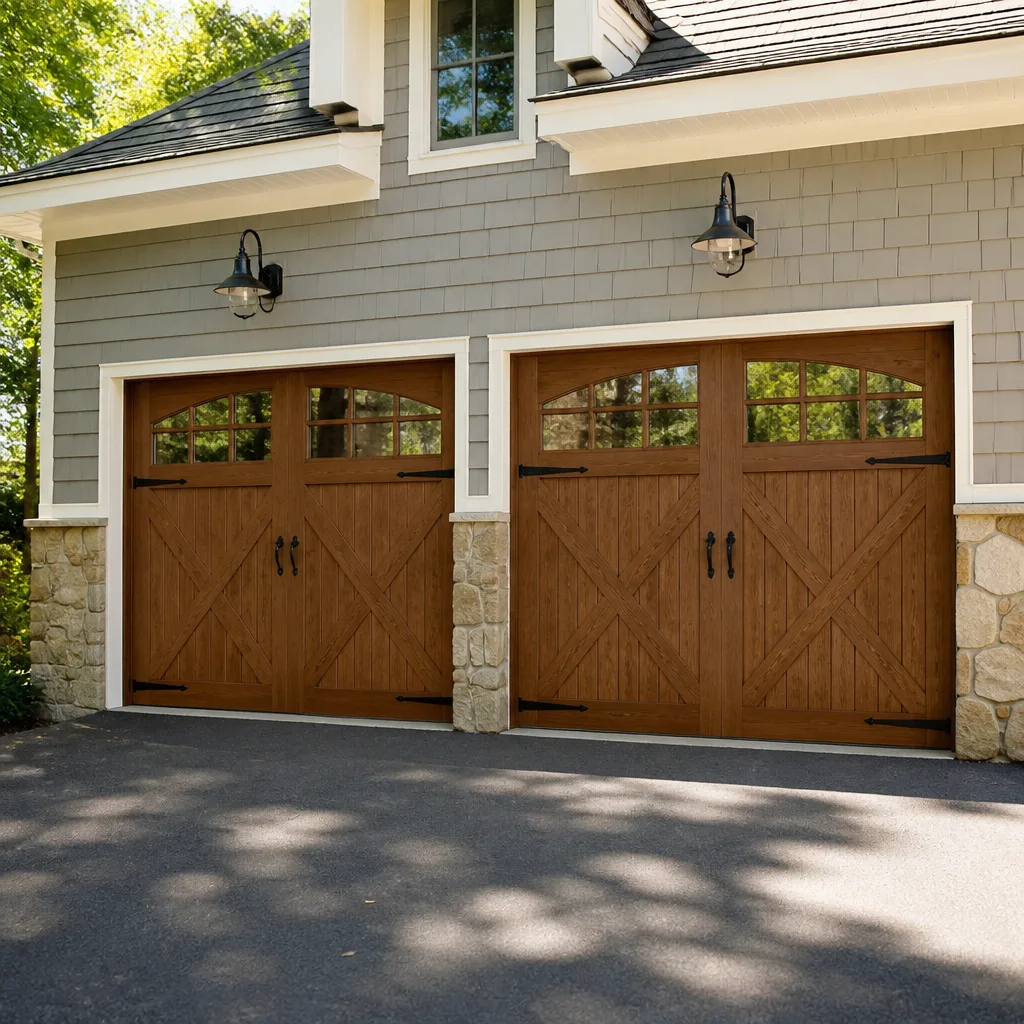 Carriage house
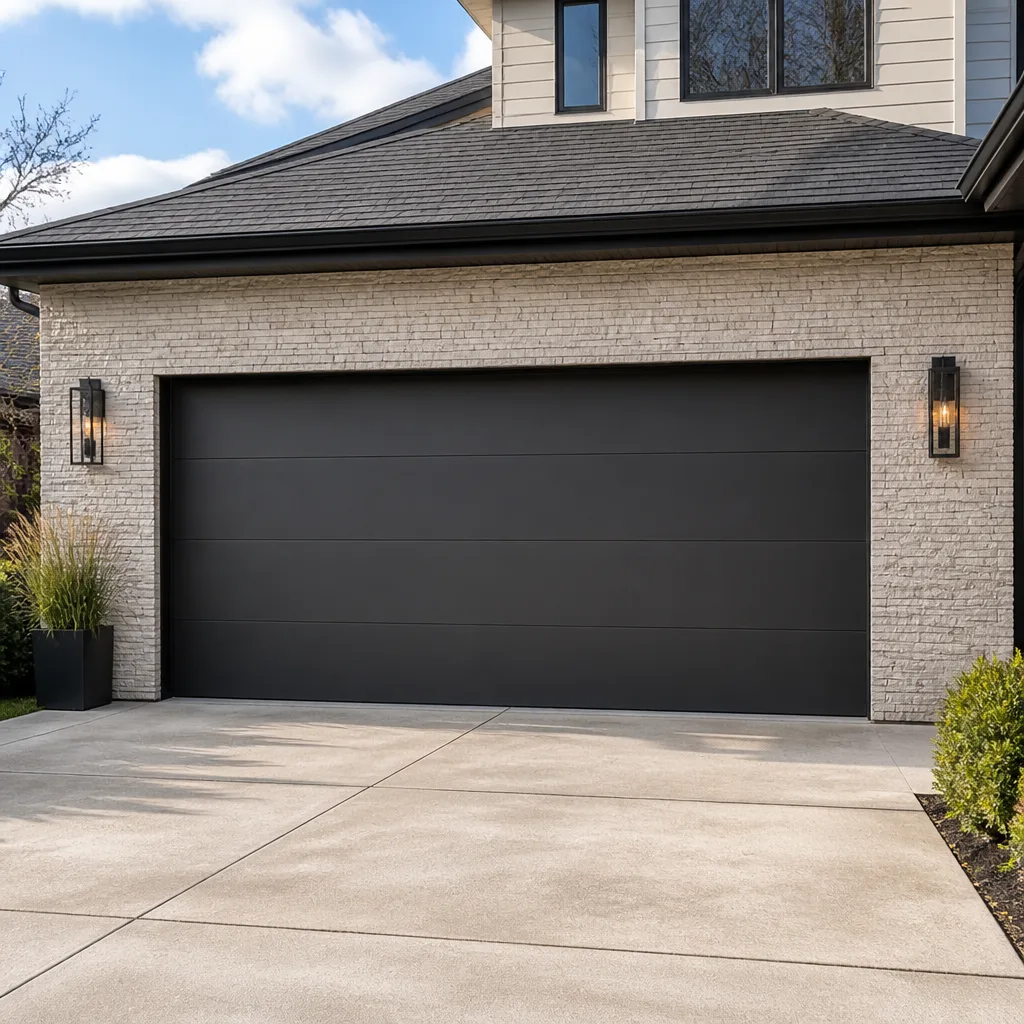 Modern flush
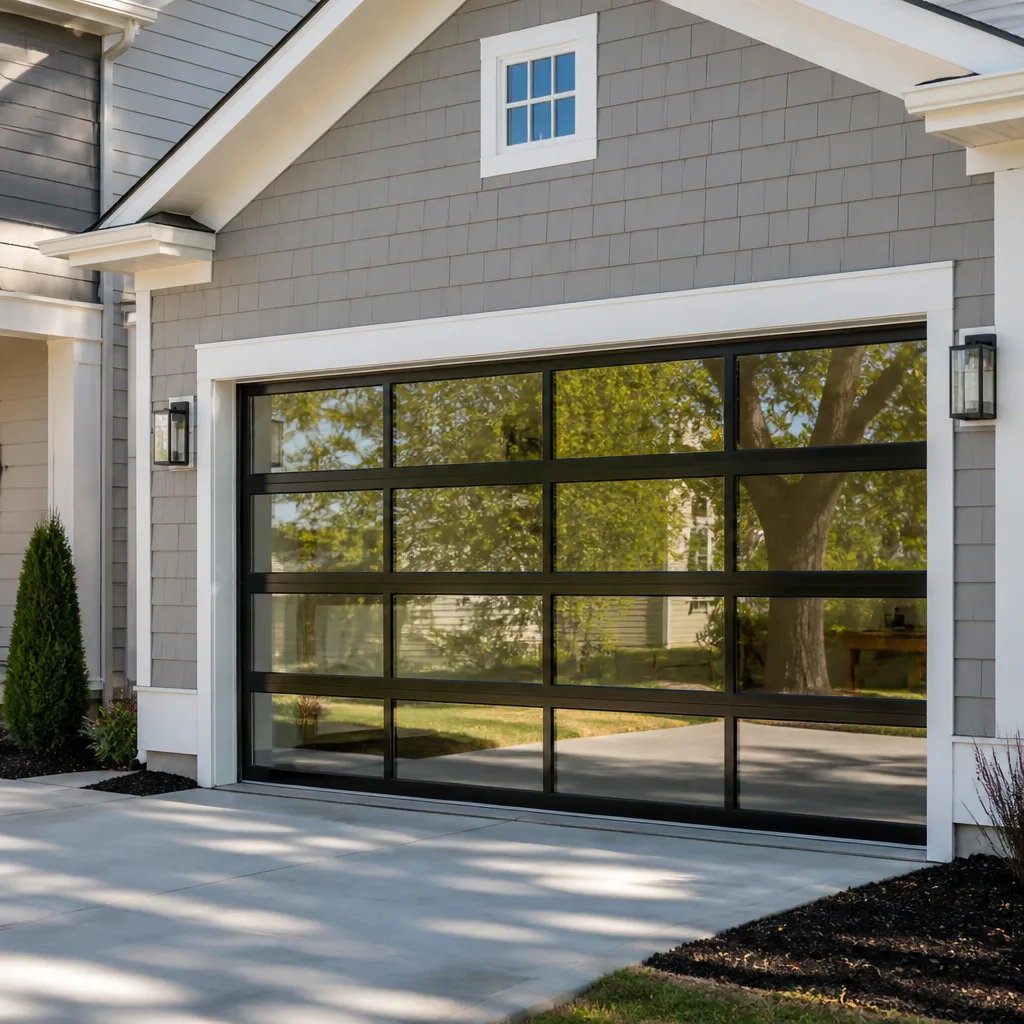 Full-view glass
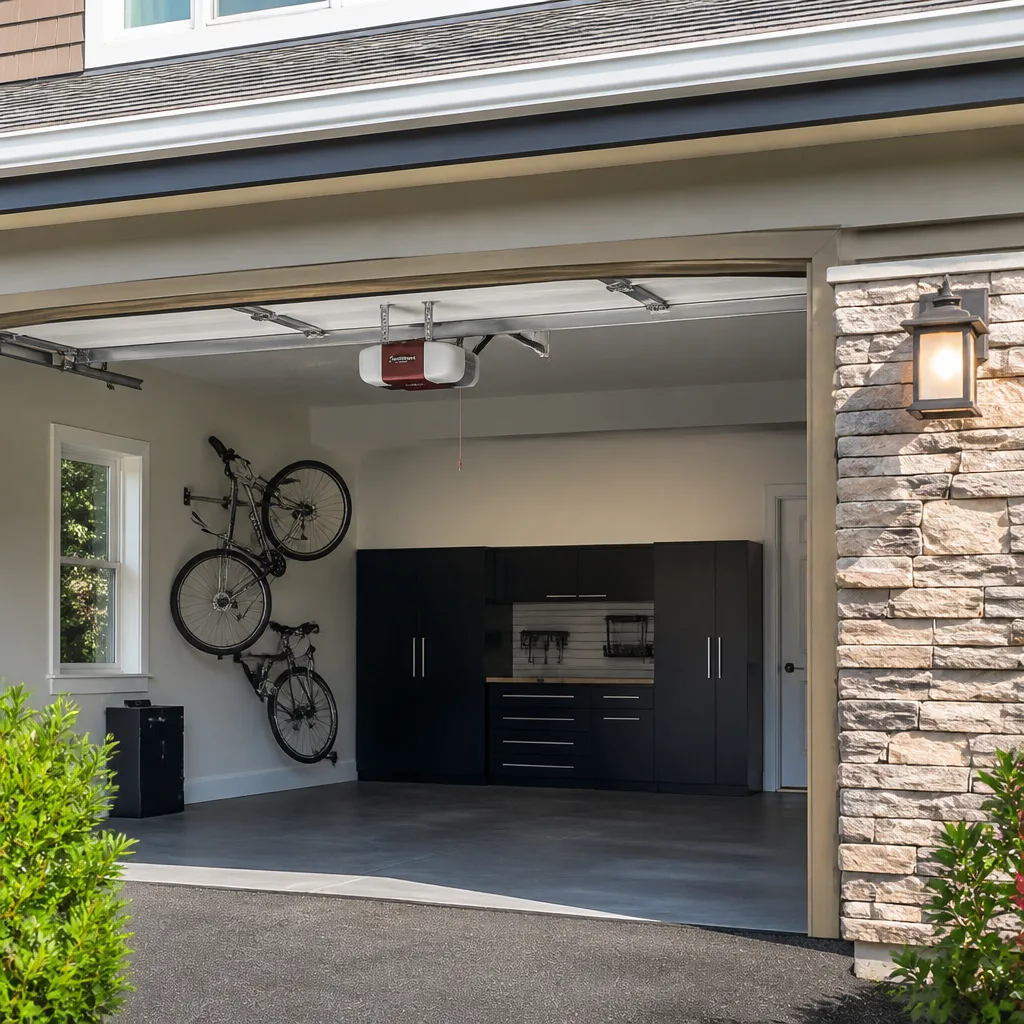 LiftMaster openers
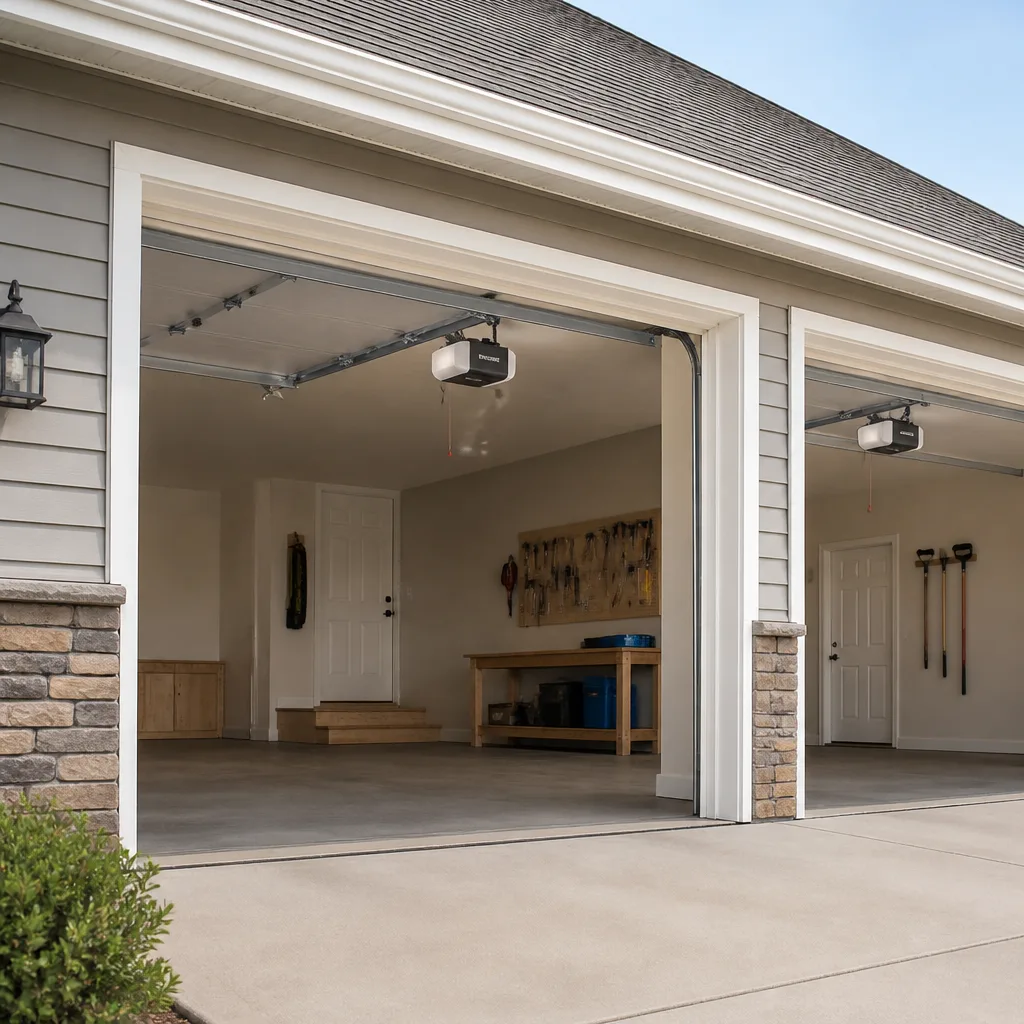 Chamberlain openers
Full 25-point door and opener safety check with every visit - springs, cables, rollers, tracks, and your LiftMaster or Chamberlain opener included
You get a price before we start. It does not change when the pro arrives.
Get your free estimateGarage Door Warning Signs: A Pawtucket Homeowner’s Reference Guide
Most garage doors don’t break without notice. They warn you for weeks – sometimes months – through a grind that wasn’t there last spring, a door that’s moving a beat slower, a slight tilt you catch out of the corner of your eye. Homeowners tend to file those signals under “that’s just how it sounds now,” right up until a spring snaps or a cable lets go. This guide is about the early stage: the sounds and behaviors that show up well before end-stage failure, and how to read them from the ground without touching anything. We’ll cover a sound-based diagnostic, the mechanical meaning of a slower door, a 30-second visual check for uneven cable tension, the difference between noisy-because-dry and noisy-because-failing, and the warning signs specific to older openers. By the end you’ll know which symptoms mean “watch it” and which mean “stop using the door today.” Everything here is written from Pawtucket, for the mix of older homes and newer builds that make up this city’s housing stock.
Quick Answer
The main garage door warning signs are: grinding, popping, or scraping sounds during operation; a door that moves noticeably slower than it used to; visible sagging or tilting when partly open; cables that look slack on one side and tight on the other; and an opener motor that sounds strained or labors to lift the door. Any single one of these means the door deserves a professional look before it fails. A grinding or popping sound paired with a door that won’t stay up is a stop-using-it-today signal, because the springs or cables that hold the door’s weight may already be compromised.
Styles & brands we work with
- Raised-panel steel
- Carriage house
- Modern flush
- Full-view glass
- LiftMaster openers
- Chamberlain openers
Table of Contents
- The Sound-Based Diagnostic: What Each Noise Tells You
- Why a Door That’s “A Little Slower” Is a Specific Signal
- The 30-Second Visual Test for Uneven Cable Tension
- Noisy Because Dry vs. Noisy Because Failing
- Warning Signs Specific to Older Openers
- Signs That Mean Stop Using the Door Today
- How Pawtucket Weather and Older Homes Shape the Diagnosis
- Common Mistakes to Avoid
The Sound-Based Diagnostic: What Each Noise Tells You
Sound is the earliest diagnostic tool you have, because a garage door is a system of moving metal parts under tension, and any part starting to wear announces itself before it breaks. The trick is knowing which noise points at which component. In our experience, most homeowners lump every odd sound into one bucket called “the door is loud.” These are the four most common noises, and what each one usually implicates:
- Grinding. A grinding or growling sound, especially as the door starts up or comes down, usually points at the rollers, the hinges, or the opener’s gear and rail. Worn steel rollers grinding inside the track are the usual suspect, and on older openers, a worn drive gear inside the motor housing can produce the same sound from above. If the grind comes from the track itself, the rollers or the track alignment is the place to start.
- Popping. A popping or snapping sound, particularly as the door reaches the top or bottom of its travel, often implicates the springs or the torsion hardware. Springs under tension can pop as coils shift. This is the noise that deserves the most caution – never try to investigate it by hand. Torsion springs and the cables they work with hold the door’s full weight and can cause serious injury if handled wrong, which is why spring work belongs to a trained technician.
- Scraping. A scraping or squealing sound usually means metal is contacting something it shouldn’t: a roller that has come out of the track, a bent hinge rubbing the door panel, or a door that’s slightly out of square and dragging the track. It tends to be a symptom of misalignment rather than a failing part.
- Rattling or clanking. Loose hinges, loose track brackets, or a door panel that’s working its bolts loose. Annoying more than dangerous on its own, but worth tightening because a loose bracket can lead to misalignment.
One caution: don’t climb up to listen closer. You can learn a lot standing on the floor with the door cycling. If the noise changes from occasional to every cycle, or gets louder over a week or two, that’s your signal to book a diagnostic. For sound that traces to the opener itself rather than the door, garage door opener repair is the right call – a trained tech will separate opener noise from door noise quickly, which most homeowners can’t do by ear alone.
Why a Door That’s “A Little Slower” Is a Specific Signal
A garage door should move at a consistent, predictable speed every time. If it’s slower than it used to be – or if it hesitates noticeably when it starts moving – that’s a mechanical signal worth taking seriously. A slower door almost always means something is resisting the opener, and the door is being asked to lift more weight than it’s designed for. That extra load has a few common causes:
- Spring tension has dropped. Springs do the heavy lifting; the opener just steers. As springs lose tension, the motor has to carry more of the door’s weight, so the door moves slower and the motor works harder.
- Rollers or tracks are dragging. A seized roller or a track that’s slightly out of line adds friction, and friction reads as “slower.”
- The door is out of balance. A properly balanced door will hold itself halfway open. If you have to help it, the balance is off and the opener is compensating.
- The opener’s drive is worn. Worn gears or a loose chain or belt let the motor spin without transferring full force to the door.
Why does a slow door matter if it still opens? Because the opener and the springs are both working outside their comfort zone, and one of them eventually gives. A slow door is your best diagnostic window: it gives you weeks to diagnose and fix a cause before it becomes a breakdown. In Pawtucket, where a lot of homes sit on small lots with a detached or attached single-bay garage, a door that’s slowing down is easy to ignore because it still “works.” Pay attention to it. If the door has also become noisier, the two symptoms together usually point at the same underlying cause.
The 30-Second Visual Test for Uneven Cable Tension
You can spot uneven cable tension from the ground in about 30 seconds, without touching anything. On a standard sectional door, two cables run vertically on the left and right, winding onto drums at the top corners. When both sides are pulling evenly, the door operates smoothly and stays level. When one side is carrying more tension than the other, the door tilts. Here’s how to check it safely:
- Stand back and look at the door closed. Compare the gap between the bottom of the door and the floor on the left and right. A gap that’s noticeably bigger on one side is one early sign.
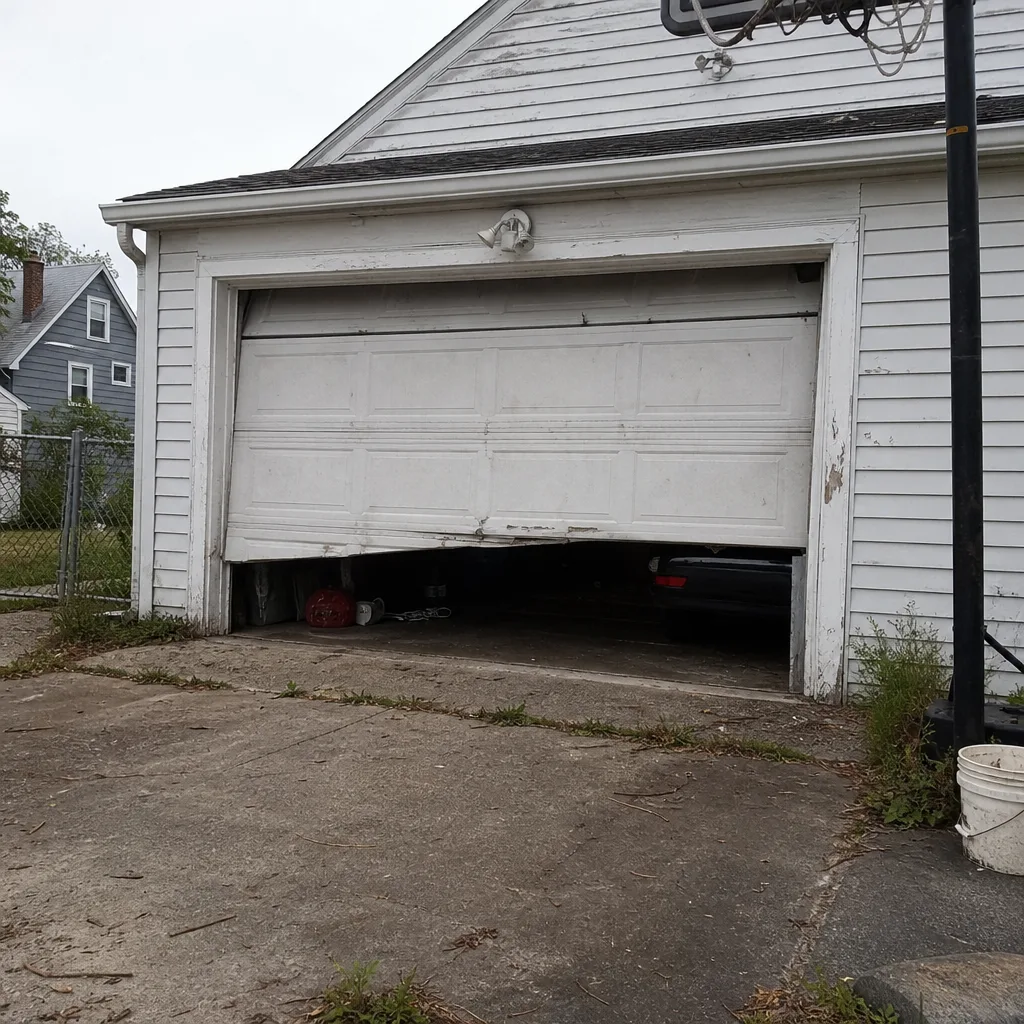
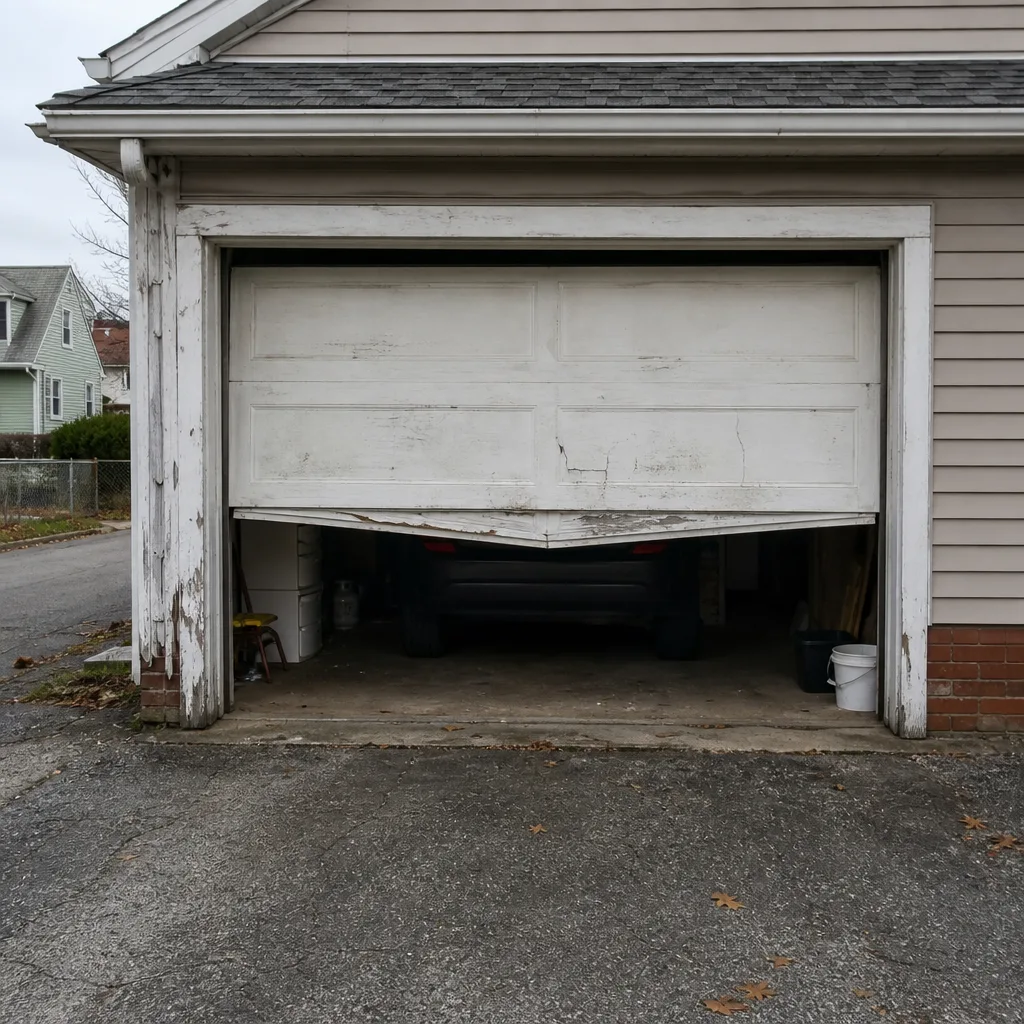
- Raise the door about a foot and stop it. Check whether the bottom edge stays level. A door that cants to one side when partly open is telling you the tension isn’t balanced.
- Visually compare the two cables. With the door down, look at both vertical cables where they run alongside the tracks. One cable sitting visibly slack while the other is tight is the classic uneven-tension look. The door doesn’t need to be moving for you to see it.
- Watch the door cycle from a distance. If the door shimmies or swings at one corner as it travels, the cables are pulling at different rates.
This is a look-only test. Never reach for, tug, or try to adjust a cable – cables are under high tension and can cause serious injury. If you see slack or a tilt, stop cycling the door and get a technician out. Uneven cable tension is one of the failures that garage door spring repair visits most often catch on older doors, because cables and springs wear together. If your door is a Clopay, Amarr, or Wayne Dalton model, telling us the brand when you call helps the tech arrive ready for that specific hardware.
Noisy Because Dry vs. Noisy Because Failing
Not every loud door is a breaking door. Some are just dry, and that distinction matters because it decides whether you have a maintenance job or a repair job. A noisy-because-dry door tends to make a consistent squeak, squeal, or groan that’s present every cycle and roughly the same volume each time. It’s usually the rollers, hinges, and the torsion spring at the top that need lubrication. If the noise is uniform, predictable, and hasn’t changed in months, it’s more likely dry metal than a failing part.
A noisy-because-failing door sounds different. These are the tells that separate the two:
- The noise is new or getting worse. A sound that wasn’t there last month, or that’s louder this week than last, is a wear signal, not a lubrication signal.
- The noise is intermittent. A grind or pop that happens every third or fourth cycle, not every time, often points at a specific part that’s shifting under load – the kind of thing that fails unpredictably.
- The noise comes from the springs or cables. Grinding from the rollers is usually maintenance; popping from the springs is the signal to stop and call.
- The door sounds different under load. A door that screeches loudly as it lifts but quiets as it settles is telling you the opener is straining against resistance.
Lubrication keeps a healthy door healthy. It doesn’t fix a part that’s already failing, and it shouldn’t be used as a substitute for diagnosis. If you’ve lubricated the rollers and hinges and the sound persists or changes, that’s the point to have a technician look at the door rather than layering more grease on it.
Warning Signs Specific to Older Openers
An opener that’s been on the same door for a long time can mask a door problem by overworking to compensate. The motor keeps lifting the door even as the door’s springs weaken and its rollers drag – which means the warning signs show up on the opener first, sometimes before the door’s own symptoms become obvious. These opener behaviors are worth taking seriously:
- The motor sounds strained on the way up but normal on the way down. That imbalance points at the door needing more lifting force than it should, and the opener compensating.
- The opener hesitates at the start of the cycle. A short delay before the door moves, or a stall at the very bottom, suggests the motor is near its power limit.
- The opener trips and reverses partway up. On a door with safety sensors, reversing is a safety feature; if the door reverses without an obstruction, the opener may be detecting the resistance rather than a real obstruction.
- The opener’s lights flicker or dim during a lift. A strained motor draws more power, and a bright flicker during the lift is a hint it’s working harder than it used to.
- The remote range drops. Not always a door problem, but on older systems it can signal a failing control board that’s also affecting performance.
Older Craftsman and Genie units are the most common mechanical openers we see on Pawtucket doors, and they’re typically the ones that develop this compensating behavior. Newer LiftMaster and Chamberlain systems with myQ and smart-home integration tend to flag the same problem differently – through app alerts or error codes rather than sound. Either way, the fix is the same: diagnose the door before the opener fails under the strain. If a brand-name opener is being asked to compensate for a door problem, reliability starts with garage door repair on the door side, not a blind opener replacement.
Signs That Mean Stop Using the Door Today
Some warning signs are “get it looked at soon.” Others are “stop using the door today and call.” The difference matters because a door with a compromised spring or cable can drop with enough force to injure someone or damage a vehicle. Stop operating the door and call a technician if you notice any of these:
- A bang or snap, followed by a door that won’t lift. That’s a spring failure. Don’t pull the manual release and try to lift the door – it will be far heavier than you expect.
- A door that hangs slack or lists hard to one side. A cable may have failed. Stop cycling it.
- A door that reverses partway up with no obstruction on the ground. Something in the door’s mechanical system is catching.
- A popping sound at the top of travel that repeats. Treat a repeating spring pop as an emergency, not an annoyance.
- A door that won’t stay fully closed or fully open. If the door can’t hold either position, something structural is wrong.
The reason for the caution is simple: springs and cables hold hundreds of pounds of stored tension, and the wrong move with a released spring can cause serious injury. A trained technician knows how to safely de-tension, inspect, and replace a spring. If your door is in that stop-and-call category, call (855) 658-5250 – same-day and emergency service is available. And if you have a Clopay, Raynor, or Amarr door, mention it so the tech arrives prepared for that model’s specific hardware.
How Pawtucket Weather and Older Homes Shape the Diagnosis
Pawtucket’s housing stock runs from early-20th-century triple-deckers and single-family homes to newer builds, and the older garages tend to produce a familiar set of warning signs. Detached and attached single-bay garages are common, many with wooden doors or older steel panels, which means the tracks, hinges, and rollers on these doors have often been through many winters. Any door that’s been on the same track for decades will show wear, and the signs show up in a recognizable order.
New England weather shapes what goes wrong. Cold snaps stiffen lubricant and contract metal, which can turn a mild grinding noise into a loud one in a single cold week. Better weather in spring brings the loosening that makes a door that seemed fine all winter suddenly rattle or scrape. The freeze-thaw cycle works on the concrete and on the door’s hardware. A door that was fine in November may show its first symptom in March. That’s why a slow door and a dry door aren’t things to “live with until spring.” If a warning sign shows up in winter, the fix is easiest before the next cold snap.
For newer doors and openers, the signals are quieter: a motor that’s working a little harder, a smart-home opener that flags an error code, an automatic reversal that happens once and doesn’t repeat. Any of those is still worth a diagnostic, especially if the system is a Chamberlain myQ unit that’s doing the compensating. The local knowledge matters here – a technician who works Pawtucket doors regularly has seen every vintage and knows what a problem looks like on each. Our technicians have up to 9 years of experience, and a good diagnostic visit should end with a written quote before any work begins.
Common Mistakes to Avoid
- Treating a slow door as “just how it is.” A slower door is a signal that the springs or rollers are losing efficiency, and ignoring it means the opener absorbs the strain until it fails too.
- Lubricating a failing part. Grease on a worn roller or a tired spring hides the noise for a week or two but doesn’t touch the cause, and it can make the eventual failure more sudden.
- Reaching for the cables or springs. Homeowners who try to tighten a cable or adjust a spring by hand are the ones who get hurt. Springs and cables belong to a trained technician, full stop.
- Ignoring grinding from the track. Grinding from the rollers or the track is the most common early signal, and it’s also one of the cheapest to fix if it’s caught before the track is worn or the door is misaligned.
- Pulling the manual release to “test” a door. The pull cord is for an emergency only. If the door won’t lift on its own, don’t pull the cord and try to lift it by hand – the door plus the spring tension is heavier than you’d expect.
- Waiting for a snap before calling. The whole point of an early-signs guide is that the repair is smaller, cheaper, and safer when it’s caught before the noise becomes a failure.
See the difference
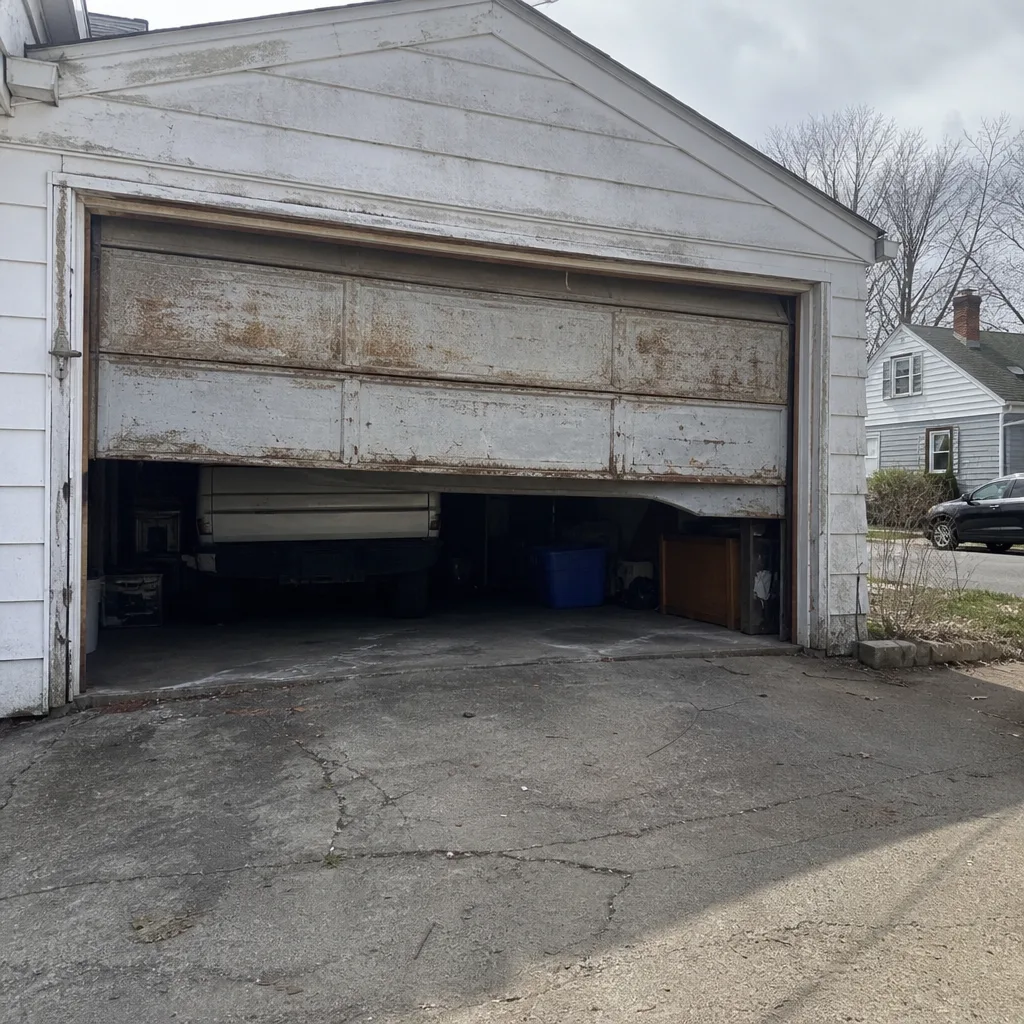 Before
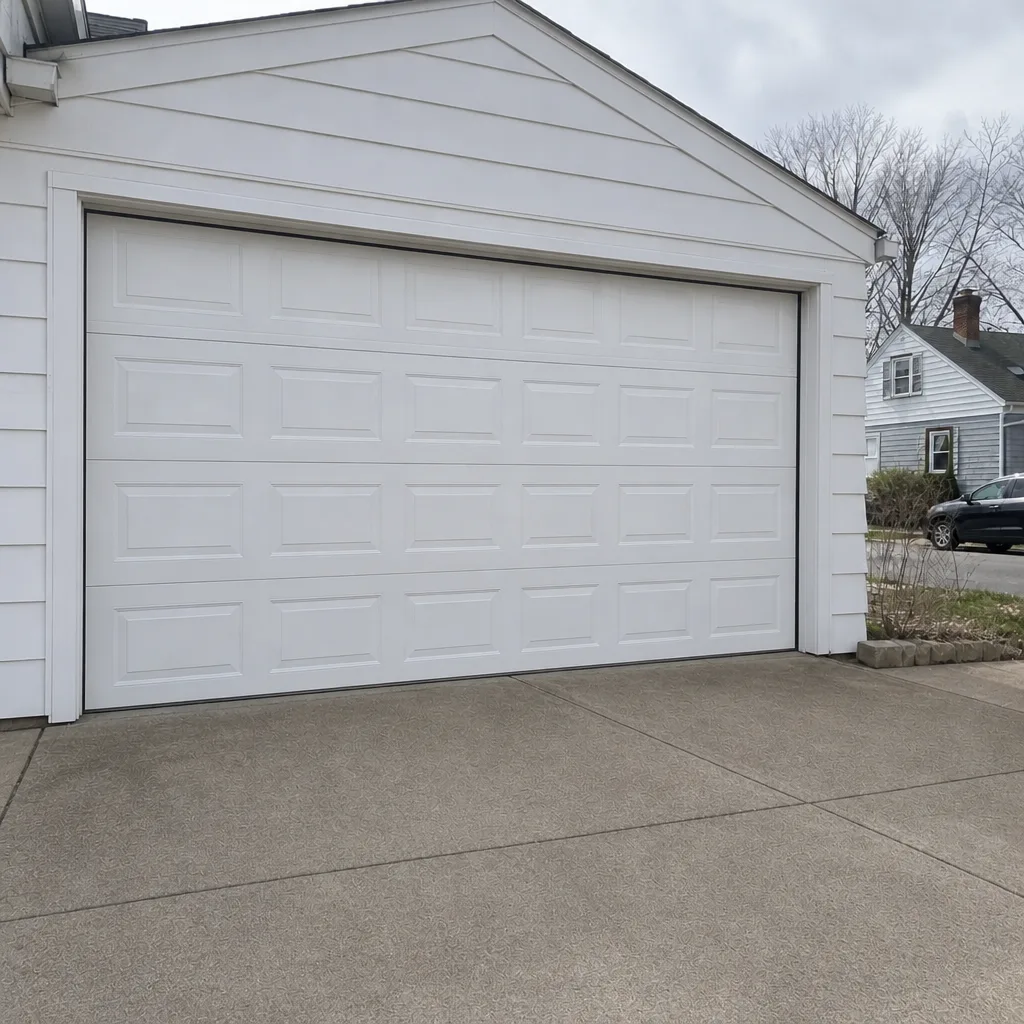 After
 Before
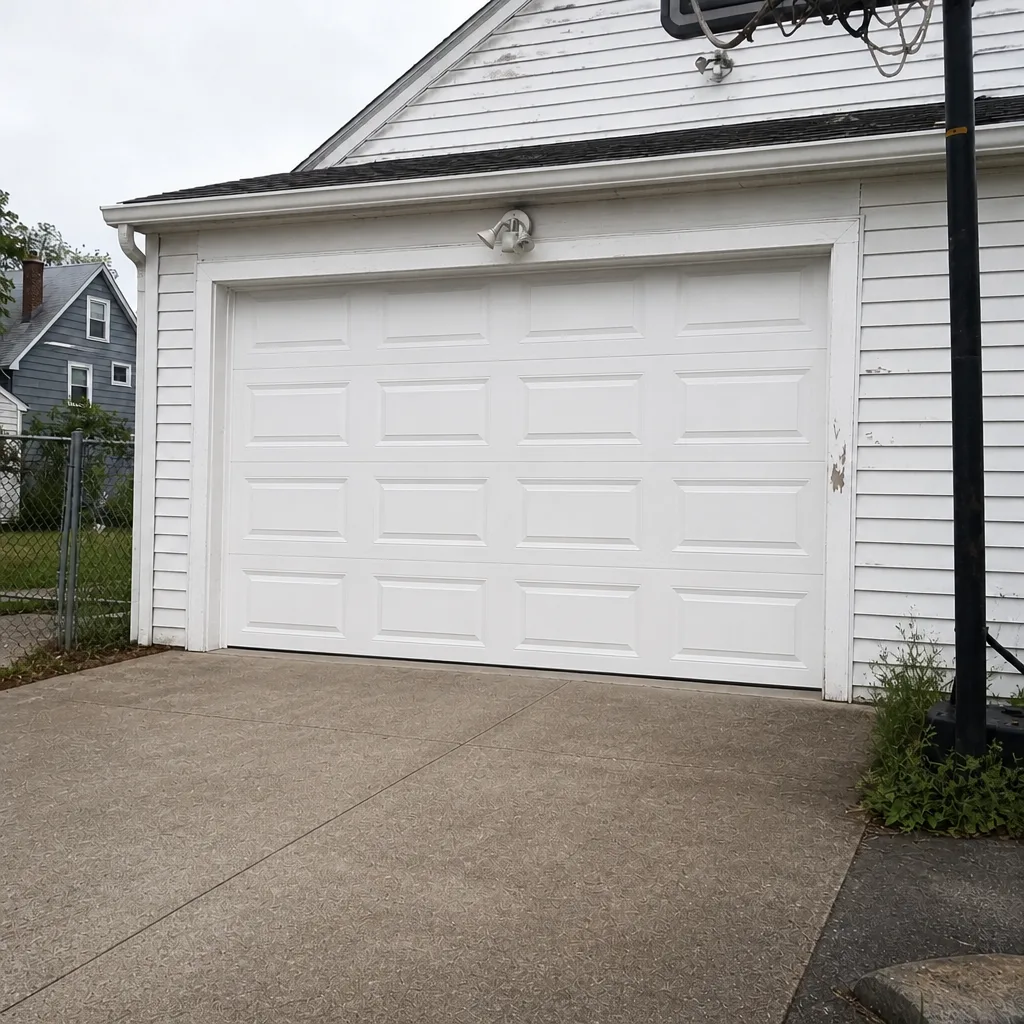 After
 Before
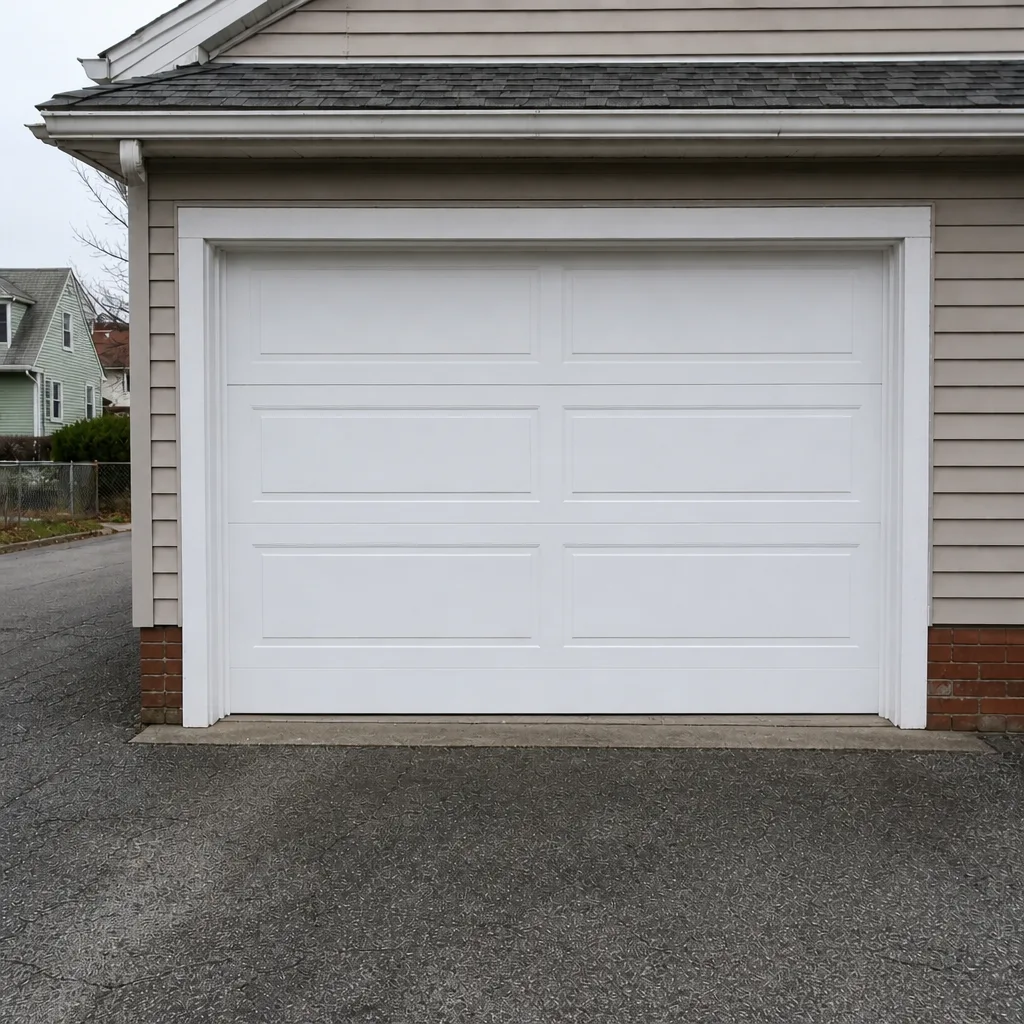 After
When to Call a Professional
As a rule of thumb, any new sound that repeats on every cycle, a door that moves slower than it used to, and any visible tilt or slack cable all warrant a professional look – even if the door still opens. Some situations are urgent: a bang from the springs, a door that won’t stay up, a cable that’s visibly gone slack or snapped, or a door that reverses partway up with nothing in the way. Those are stop-and-call cases, not watch-and-wait cases. Garage Door Repair Pawtucket offers free estimates in Pawtucket – call (855) 658-5250 for a diagnostic, and our technicians have up to 9 years of experience reading exactly this kind of warning sign. The written quote comes before any work starts, so you know the price before anything gets touched.
Frequently Asked Questions
The most common early warning signs are a new grinding or popping sound, a door that moves slower than it used to, a visible tilt when the door is partly open, and cables that look slack on one side. Any single one is worth a diagnostic, and several together usually point at the springs or rollers as the cause. Call (855) 658-5250 for an exact quote – estimates are free.
Not always. A consistent, even squeak that hasn’t changed is usually dry rollers or hinges and responds to lubrication. A noise that’s new, getting worse, or intermittent is a wear signal and warrants a professional look. Call (855) 658-5250 for an exact quote – estimates are free.
Look at the door: check the gap between the bottom of the door and the floor on both sides, raise the door about a foot and see whether the bottom edge stays level, and visually compare the two cables for one that looks slack against a tight one. Any tilt or slack is a look-only signal – don’t touch the cables, and call a technician. Call (855) 658-5250 for an exact quote – estimates are free.
Grinding most often points at the rollers, hinges, or the opener’s drive or gear. If the grind comes from the track area, the rollers or track alignment are the first suspects; if it comes from the motor housing, the opener’s drive is usually the culprit. Call (855) 658-5250 for an exact quote – estimates are free.
No. A door that sounds strained is usually a door being asked to lift more than it should, which means the opener is overworking to compensate – a symptom that tends to lead to an opener failure if it’s left alone. A diagnostic catches the cause before the failure. Call (855) 658-5250 for an exact quote – estimates are free.
Same-day and emergency service is available for situations that can’t wait, like a snapped spring or a door stuck open or closed. Routine diagnostic visits and non-urgent repairs can usually be scheduled quickly. Call (855) 658-5250 for an exact quote – estimates are free.
Yes – we work on your brand, including the older mechanical Craftsman and Genie openers common on Pawtucket homes, and the newer LiftMaster and Chamberlain systems as well. Mention which brand you have when you call so the technician arrives prepared. Call (855) 658-5250 for an exact quote – estimates are free.
The Bottom Line
Garage door failures are predictable. The grinding rollers, the popping springs, the door that’s a little slower each week, the slight tilt at the bottom, the opener that sounds strained but still lifts – these are the early warning signs, and they usually appear weeks before a door actually breaks. The value of reading them is real: caught early, most of these are smaller, safer, and less disruptive repairs than the same problem caught after a spring has snapped. As a Pawtucket specialist who covers both the door and the opener, we see the difference between the two cases constantly. Take the sounds seriously, do the 30-second visual check, and leave the springs and cables to a professional. When a sign shows up, the best move is a quick diagnostic while the door is still working – Garage Door Repair Pawtucket offers free estimates, and we’re a call away at (855) 658-5250.
Written by the team at Garage Door Repair Pawtucket.