Last updated November 23, 2026
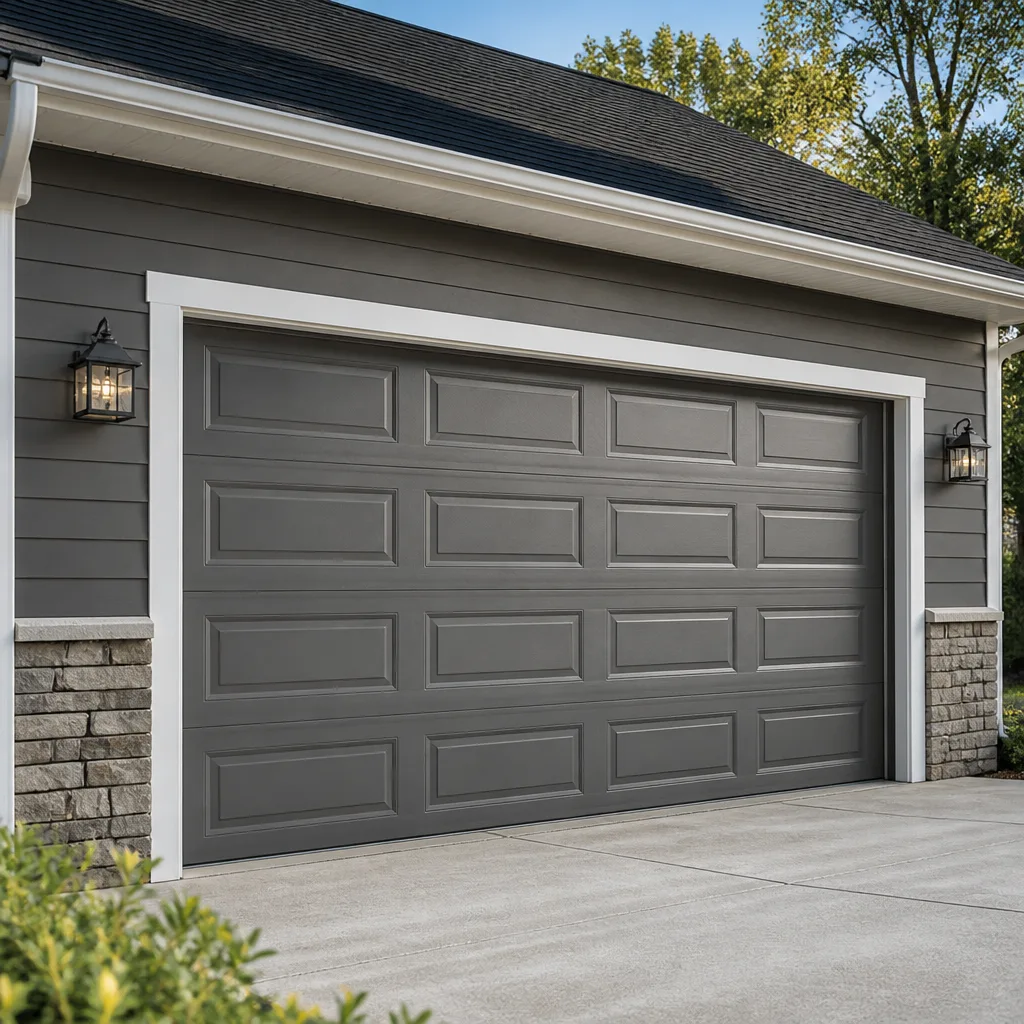 Raised-panel steel
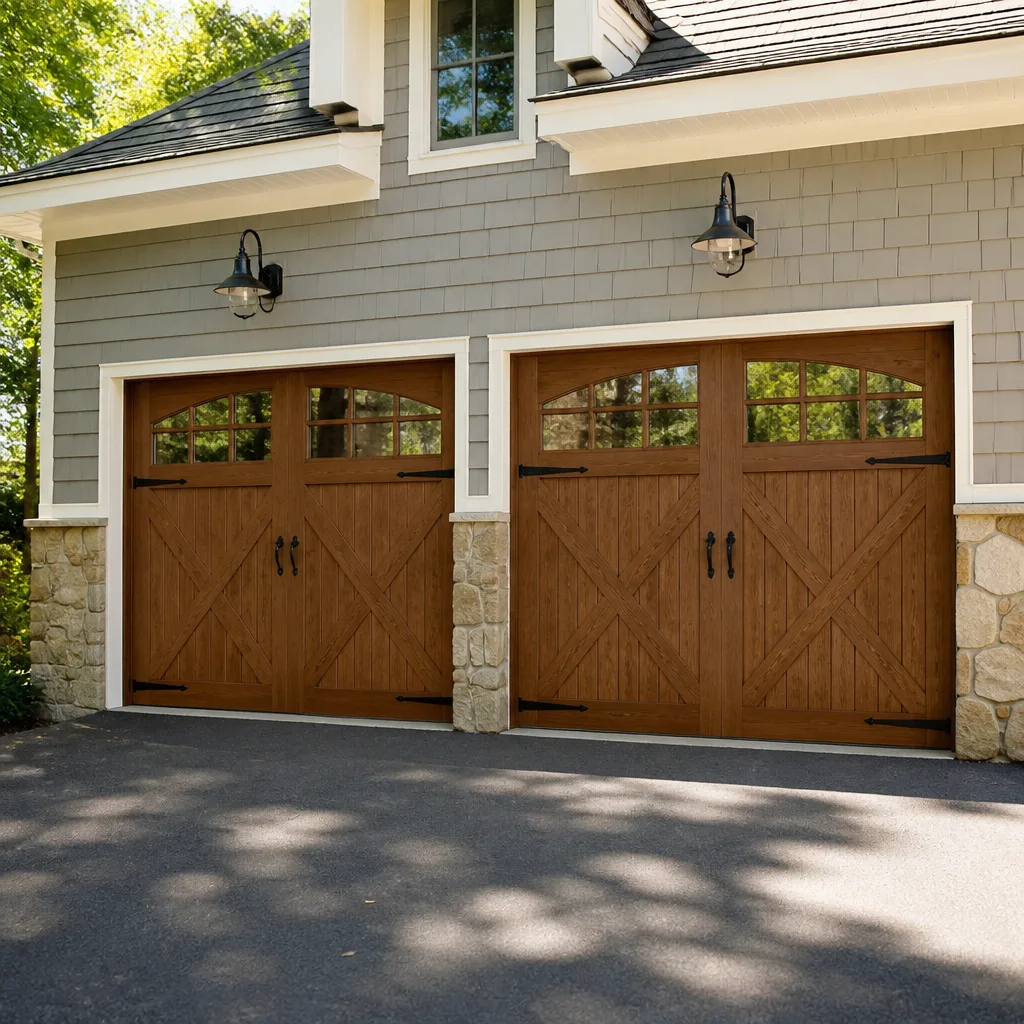 Carriage house
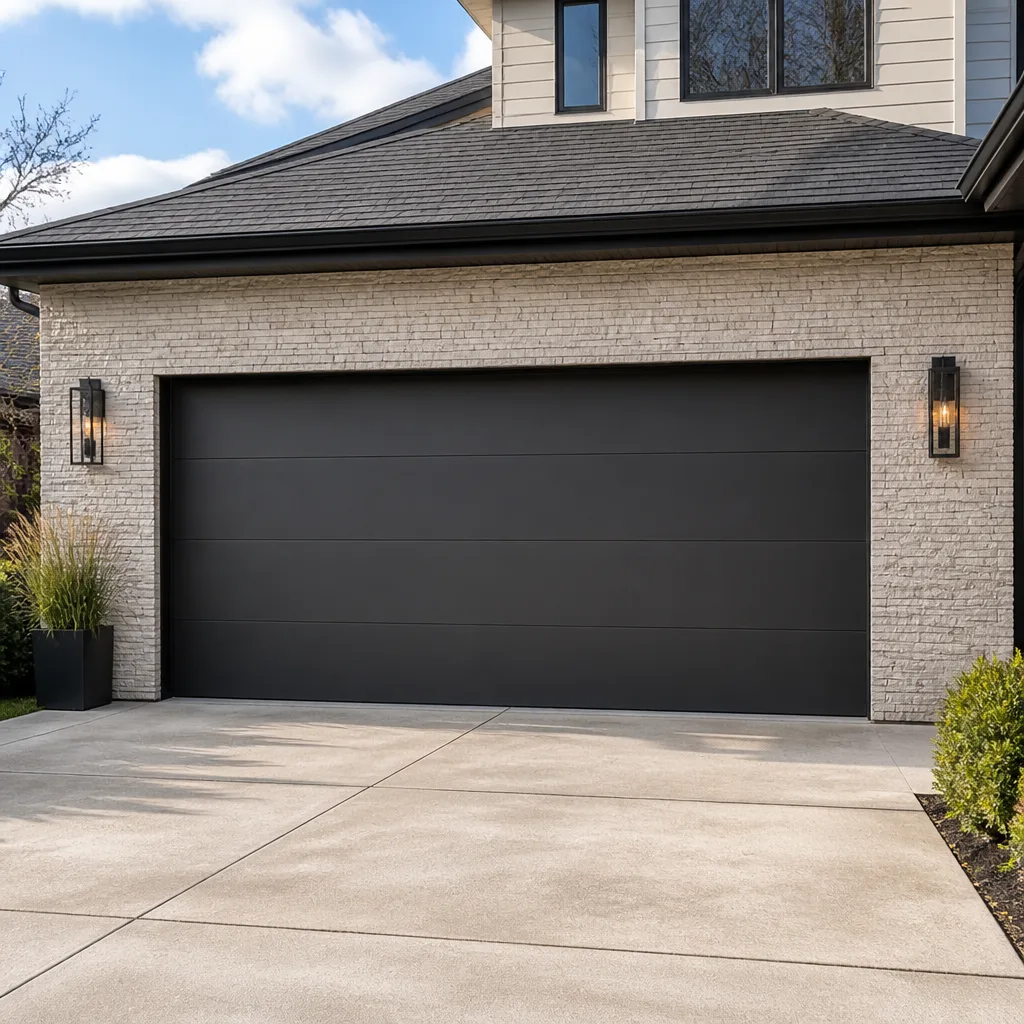 Modern flush
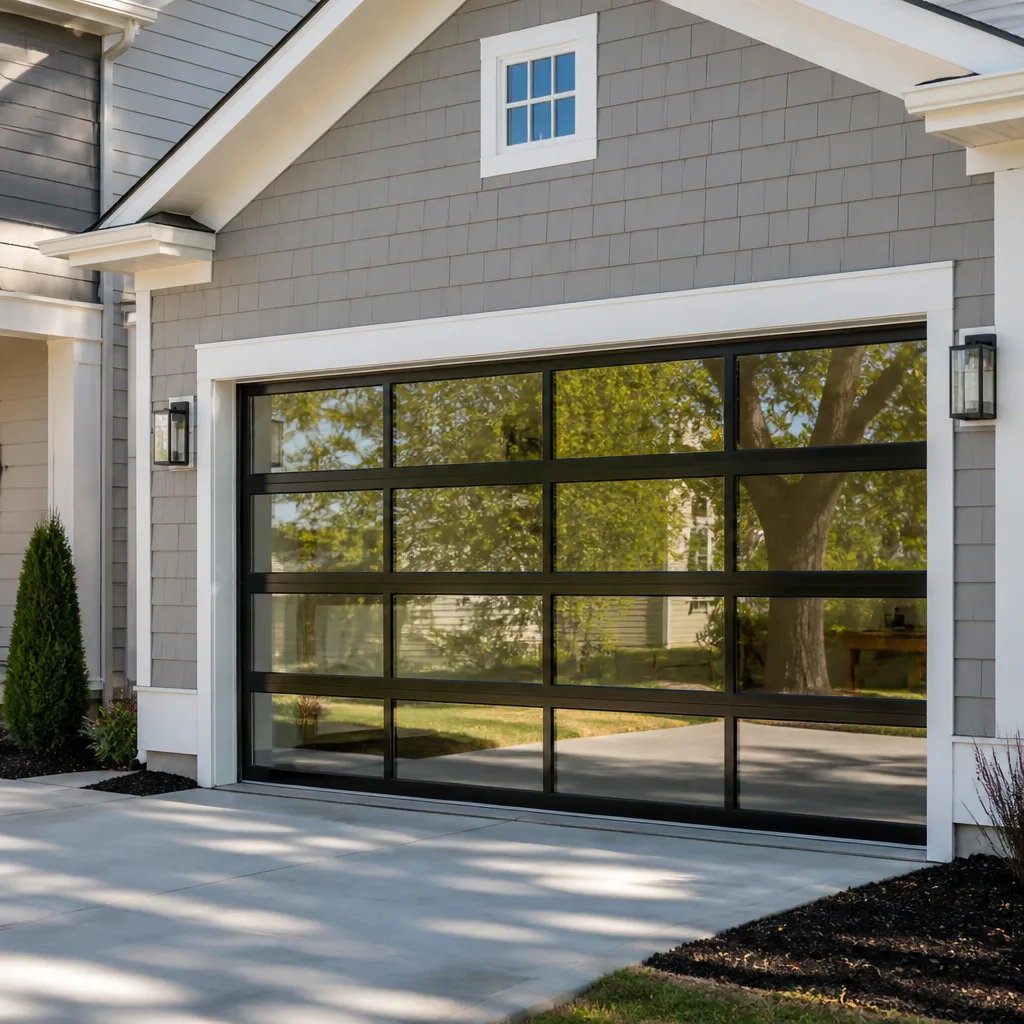 Full-view glass
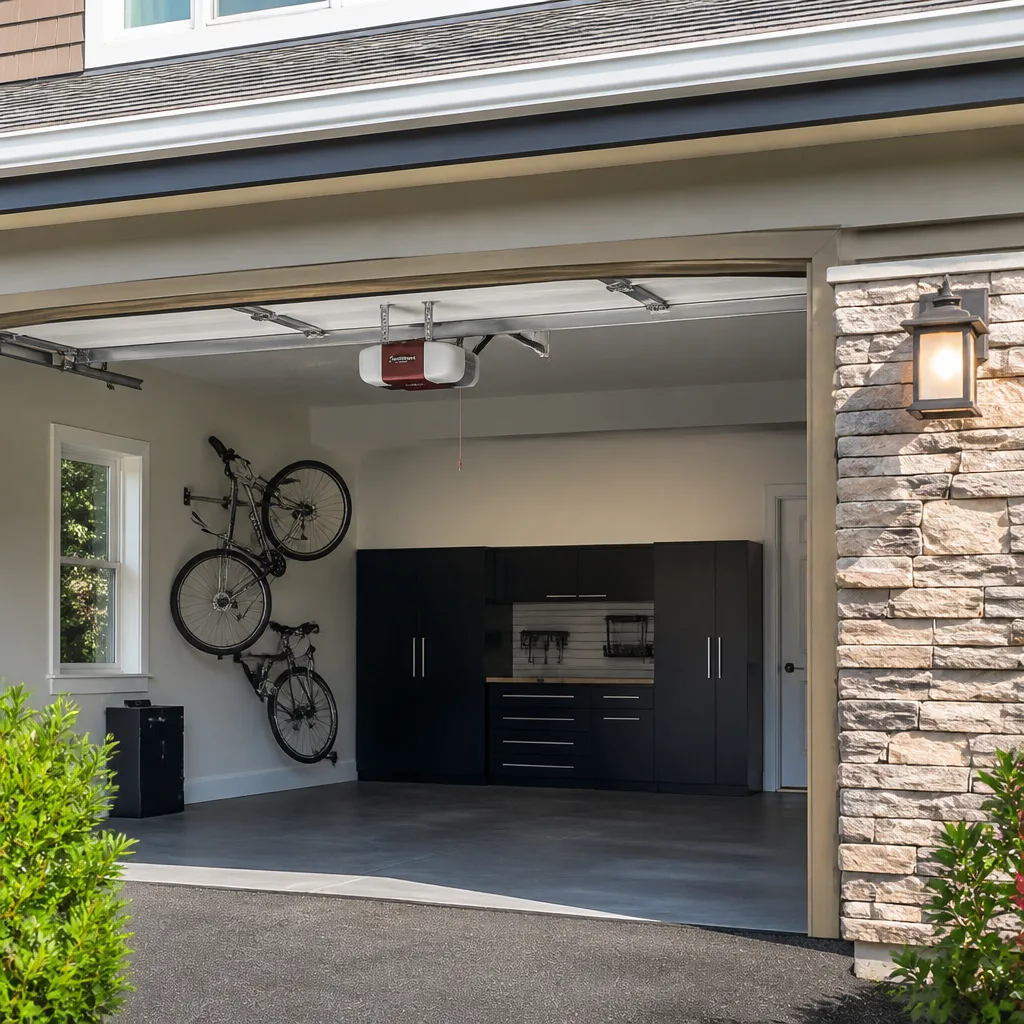 LiftMaster openers
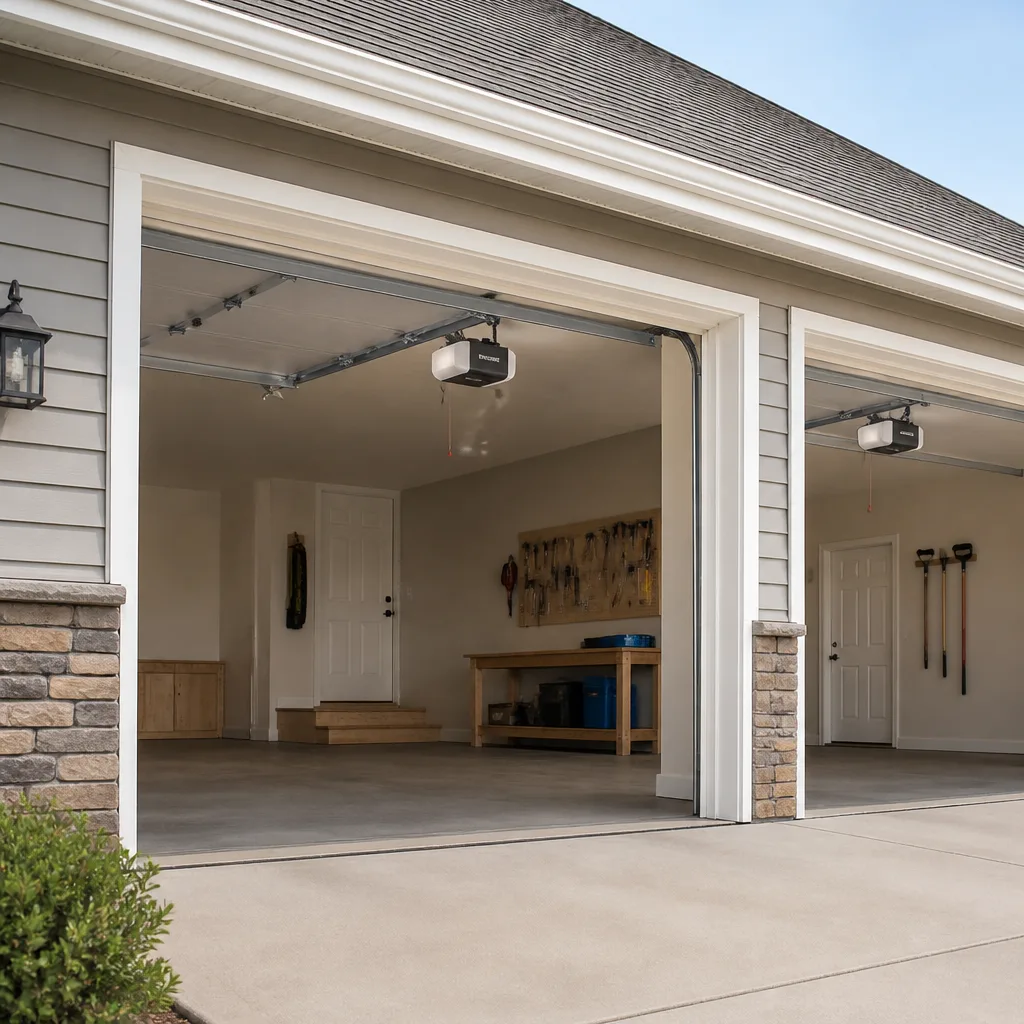 Chamberlain openers
Full 25-point door and opener safety check with every visit - springs, cables, rollers, tracks, and your LiftMaster or Chamberlain opener included
You get a price before we start. It does not change when the pro arrives.
Get your free estimateDIY vs Professional Garage Door: The Pawtucket Homeowner’s Decision Guide
Most garage door work isn’t actually dangerous. Lubricating rollers, lining up a safety sensor, and programming a new remote are all jobs a careful homeowner can handle with no special equipment. But torsion springs are a different category entirely. A wound torsion spring stores enough energy to cause serious injury when it lets go, and the reason isn’t that homeowners are careless. It’s that controlling that energy safely requires a winding bar setup and a working knowledge of turns and load balance that most households don’t own and can’t improvise. This guide draws a precise line: which tasks are genuinely safe to do yourself in Pawtucket, which ones aren’t, and how to tell the difference before you pick up a tool.
Quick Answer
Lubrication, photo-eye alignment, and remote or keypad programming are safe DIY jobs for a prepared homeowner. Spring replacement, cable replacement, and track realignment are not, because each involves stored or sudden mechanical force that a trained technician controls with purpose-built tools. If your door is stuck, making a banging noise, or hanging crooked, you can start with a garage door repair estimate rather than a trip to the hardware store.
Styles & brands we work with
- Raised-panel steel
- Carriage house
- Modern flush
- Full-view glass
- LiftMaster openers
- Chamberlain openers
Table of Contents
- Where the DIY line actually falls
- Tasks that are genuinely DIY-appropriate
- Tasks that aren’t, and the mechanical reason why
- The tools a real DIY repair requires
- The hidden cost of a repair you have to undo
- What DIY work does to your warranty
- How to judge a YouTube tutorial before you trust it
- What Pawtucket homes and weather do to doors
Where the DIY Line Actually Falls
The useful way to sort garage door work isn’t by difficulty. It’s by energy. Ask one question about any task: if something slips or releases while I’m working, where does the force go? For lubrication, that question is meaningless, because nothing is stored. For a torsion spring, that question is the whole job.
Garage doors live in two mechanical systems. The first is the opener and the safety chain: the motor, the logic board, the remotes, the photo eyes, the belt or chain. The second is the door itself: springs, cables, drums, hinges, rollers, and tracks. The first system is largely low-energy and forgiving. The second one holds the entire weight of your door under tension and gives it back fast if you release it wrong.
In our experience, homeowners in Pawtucket get into trouble when they treat the second system like the first. A sensor that won’t close the door is a puzzle. A spring that needs to come off is not.
A third category sits between the two: anything that changes how the door sits in its opening. Tracks, hinges, and rollers seem like hardware-store jobs because the parts are cheap and visible. But every adjustment you make to the door’s geometry shifts load onto the springs and cables. That’s why a crooked door is a diagnostic question, not a tightening question.
Tasks That Are Genuinely DIY-Appropriate
These are jobs where the worst realistic outcome is that the door still doesn’t work and you call someone. No stored energy, no overhead load, no special tools beyond what’s already in a basic toolbox.
1. Lubrication
Wipe down the rollers, hinges, and the spring coils with a garage-door lubricant, not motor oil or grease. Grease collects grit, and grit wears rollers faster than dry metal does. Two or three times a year is plenty. In a Rhode Island climate, you’ll notice stiff hardware at the start of a cold snap, which is usually the sign it’s due.
2. Photo-eye alignment
The safety sensors near the floor should face each other and light steadily. A bumped sensor, a spider web, or a leaf caught in front is behind a large share of “my door won’t close” calls. Loosen the bracket, aim, and tighten. If the light won’t hold steady even after a clean and a re-aim, the sensor or the wiring is the problem, and that’s a repair.
3. Remote and keypad programming
This is almost always a manual job. Brands differ in their button sequences, and the sequence changes by generation. For a LiftMaster or Chamberlain with myQ, the pairing routine is different again. Find the model number on the opener’s head unit, pull the manual, and follow that sequence. If you’ve misplaced the manual, a technician visiting for something else can usually program it at the same time.
4. Replacing opener batteries and bulbs
Straightforward, and worth doing before you assume the opener is failing. A remote with a weak battery behaves like a failing logic board, and one dead bulb is not a symptom of anything.
5. Visual inspection
Stand back and look. Worn rollers, a frayed cable end, a spring with a visible gap, a door that sits crooked in the opening. Inspecting is free and safe, and it makes any conversation about garage door opening service more useful because you can describe what you see.
Tasks That Aren’t, and the Mechanical Reason Why
Torsion spring replacement
A torsion spring is wound to a specific number of turns and locked to a shaft. Releasing those turns with the wrong bar, or with a bar that slips out of the winding cone, sends the bar and the spring energy where the tool can’t control it. The specialized winding bars, the turn count, and the load balance all have to be right before the door comes down. This is the single most safety-critical job in the trade, which is why garage door spring repair is a job we treat as its own discipline rather than a general call. Extension spring systems are different but no less loaded. Either way, this isn’t a job to learn on your own door.
Cable replacement
Cables hold the door’s weight at the drum and sit under the same tension as the springs. A cable that snaps free can whip. Replacing one means releasing that tension first, which puts you back into the spring job, since the two systems are designed to release together. This is why a technician replaces a cable and any related spring work as one job rather than a cable swap.
Track realignment
Tracks bend for a reason: something hit the door, a roller failed, or a panel is out of alignment. Forcing a bent track back with a hammer usually makes the door bind in a different place. Realignment is also a measurement job, since the two vertical tracks have to be parallel and plumb. Get that slightly wrong and the door wears rollers fast and strains the opener. If your door is off its track, stop using it and call.
Panel and structural repair
A dented bottom section on a Clopay or Amarr door may be replaceable on its own, but the hinge and stile work that follows needs the door’s load managed. Panels aren’t interchangeable across makers, and a mismatched section can throw off the door’s balance.
- Safe for DIY: lubrication, sensor alignment, remote programming, batteries, visual inspection
- Not safe for DIY: torsion springs, extension springs, cable replacement, track realignment, panel replacement
- Depends: roller and hinge swaps on a door with springs already under tension
The Tools a Real DIY Repair Requires
Homeowners often compare the cost of a repair to the cost of the parts and find the parts look cheap. The comparison is missing a step. Here’s what a proper repair of the loaded components actually requires, beyond a basic tool kit.
- Winding bars rated for torsion work. Two, matched to the spring size. Improvised substitutes are the most common reason spring jobs end in injury.
- A come-along or winding bar setup you trust under load. You need to hold the door’s weight while the spring is untensioned.
- A stepladder rated for the work and the height. Springs on a two-car door sit high, and reaching them from a step stool is how people fall.
- A torque wrench and socket set for the bracket and drum bolts. Over-tightened or loose bolts are how a repair becomes a repeat problem.
- Clamps to lock the door in place. The door has to be mechanically immobilized while any loaded part is removed.
- Proper eye protection and gloves. Non-negotiable when springs or cables are involved.
- A level and a straightedge for any track work. Track alignment is a measurement job, not a feel job.
Add up those items for a single repair and the parts-cost comparison stops looking like a comparison at all. Then consider that the tools sit unused afterward.
The Hidden Cost of a Repair You Have to Undo
This is the scenario homeowners underestimate. A repair attempted with the wrong parts or the wrong sequence doesn’t always fail cleanly. Sometimes the door works for a week, then binds, then the opener starts straining, then a second problem shows up that looks unrelated.
What the technician then faces is two jobs: undoing the first attempt, then doing the repair correctly. Undoing can take longer than the original job would have. Springs installed with the wrong turn count have to be re-wound. Tracks forced out of shape have to be replaced rather than straightened. Cables shortened by a wrong swap have to come off. A door left half-assembled means the technician spends the first part of the visit working out what was done rather than fixing the problem.
In our experience, the most common version of this in Pawtucket is a spring swap done with a generic spring from a hardware store. Springs are matched to the door’s weight and height, not to the door’s width alone. A slightly wrong spring will hold the door for a while and then start slamming or leaving the door half-open. By the time it gets diagnosed, the opener has taken a beating too.
The other version is a sensor or opener issue that gets treated as a door issue. The homeowner adjusts the door’s travel limits to force it to close, which works until the door meets an obstruction. That’s when the garage door opener repair turns into a safety question rather than a convenience question.
What DIY Work Does to Your Warranty
If your door or opener is still under manufacturer coverage, DIY work on the covered components can affect a claim, so it’s worth checking before you start. The exact terms vary by maker and by product line, and we won’t pretend they’re identical across a Clopay door and a Genie opener. Read the warranty booklet that came with the unit, or ask the manufacturer directly.
The pattern most homeowners run into is this: the manufacturer covers defects in materials and workmanship, not the results of work done outside their instructions. If a part fails because it was installed or adjusted incorrectly, that’s usually outside the coverage. If a part fails on its own, that’s usually inside it, whether you or a technician made the call.
What this means practically:
- Keep your paperwork together. Model numbers and serial numbers matter when you make a claim.
- Lubrication and sensor work rarely affect a warranty. They’re maintenance, not modification.
- Spring, cable, and track work done outside the manufacturer’s instructions is the risky category.
- If you have a technician out for something else, ask them what’s still under coverage before doing anything in that category yourself.
Emergency situations are a separate question. A door that won’t close is a security problem, not a warranty problem. Our emergency garage door service exists because sometimes the answer is “get it working now” and the paperwork can wait.
How to Judge a YouTube Tutorial Before You Trust It
Not every tutorial is wrong, and not every polished one is right. The details that separate a specialist from a generalist show up quickly once you know what to look for.
Look for the tool. If a spring tutorial doesn’t show two proper winding bars, close the tab. A specialist shows the tool because the tool is the job. A generalist skips it because the tool isn’t in their kit.
Look for the warning. A specialist names the danger specifically: what can release, what it can do, and why they stop. A generalist says “be careful” and moves on.
Check the model number. A specialist works with a known unit and shows the label. Brands differ; a LiftMaster logic board and an older Craftsman logic board don’t share a troubleshooting sequence. If a video says “these are all basically the same,” that’s a generalist signal.
Check the vocabulary. A specialist says “torsion spring,” “winding cone,” “drum,” “safety reverse.” A generalist says “the spring thing” and “the motor part.”
Watch how it ends. A specialist tells you when to stop and call someone. If the video insists every job is doable at home, that’s the signal to be skeptical.
Read the comments for the failure cases. Homeowners who tried the tutorial and found a problem tend to say so. A specialist often replies to those comments with a correction. That’s a good sign.
What Pawtucket Homes and Weather Do to Doors
Garage doors in Pawtucket deal with a full seasonal swing. Cold winters tighten metal and stiffen lubricant, so hardware that felt fine in fall can bind in January. Summer humidity swells wood door panels and can fog the optical sensors near the floor. The freeze-thaw cycle works on the concrete slab the door sits on, which is one reason a door that cleared its threshold in summer may scrape it in spring.
Housing stock matters too. Older homes around Darlington and Woodlawn often have original door openings that are slightly out of square, which shows up as a track that drifts. Homes in the Pleasant View and Fairlawn areas, with more recent door installations, tend to be straightforward repair jobs when something fails. Neither situation calls for a self-diagnosis: it calls for knowing which task is which.
If you’re in a home with a detached garage or an older wood door, the seasonal pattern is worth watching. Doors that need a little extra push by hand are telling you something, and it’s usually the balance, not the opener.
Common Mistakes to Avoid
- Using the wrong lubricant. Motor oil and general grease attract grit, which wears rollers and hinges faster. Use a garage-door-specific lubricant and apply sparingly.
- Adjusting travel limits to force a door closed. If your door won’t close, the reason is a sensor, an obstruction, or a failing component. Forcing the travel limit hides the problem and defeats the safety reverse.
- Buying a spring by width alone. Springs are matched to the door’s weight and height as well as its width. A close match is not a match.
- Starting a spring job without the right bars. This is the mistake that gets people hurt. If you don’t own winding bars rated for the work, you don’t own the tools for the job.
- Hammering a bent track back into place. It bends back, then binds somewhere else. Track problems need measurement, not force.
- Ignoring a bent bottom section. Small impacts on a Clopay or Amarr door compound over time. A dented section that’s still working today may be straining the hinges next year.
- Trusting a tutorial with no tool list. If the creator doesn’t show the tools, they aren’t doing the job the way it’s done.
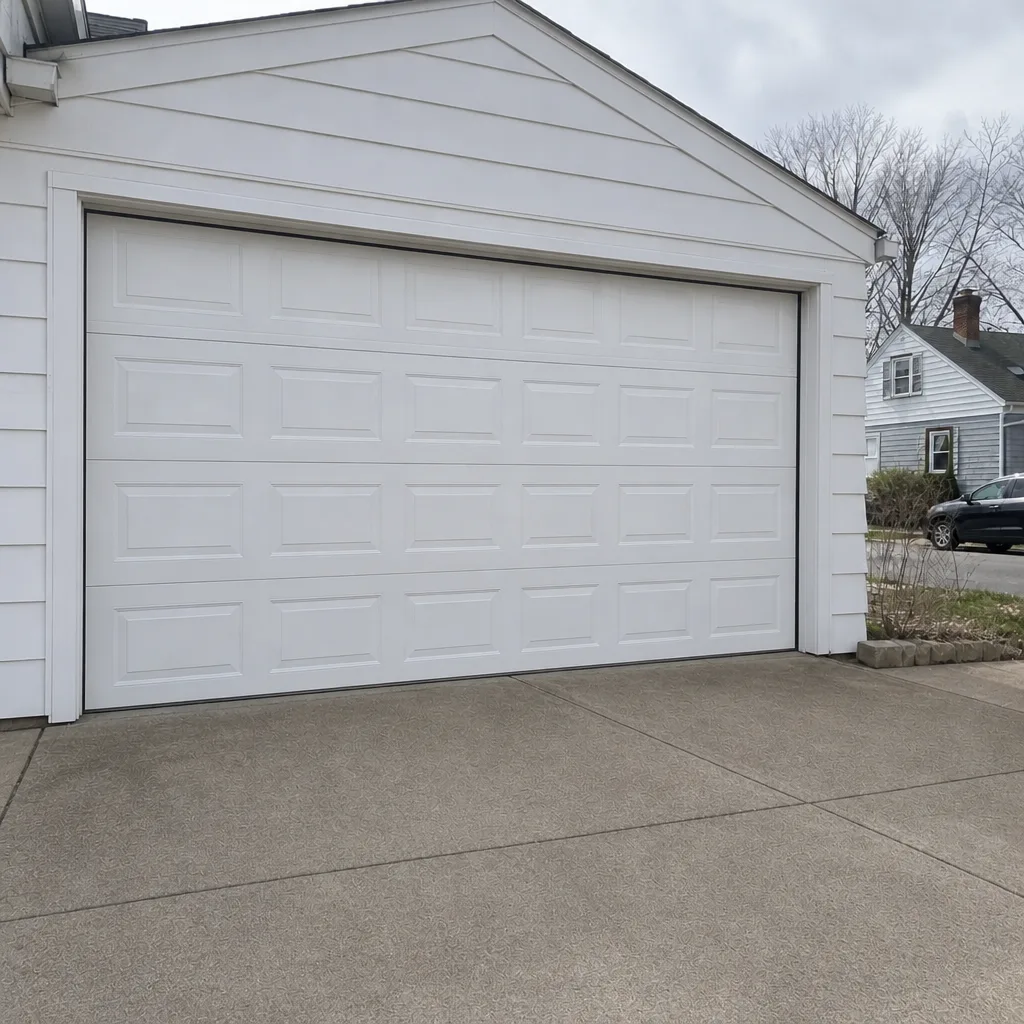
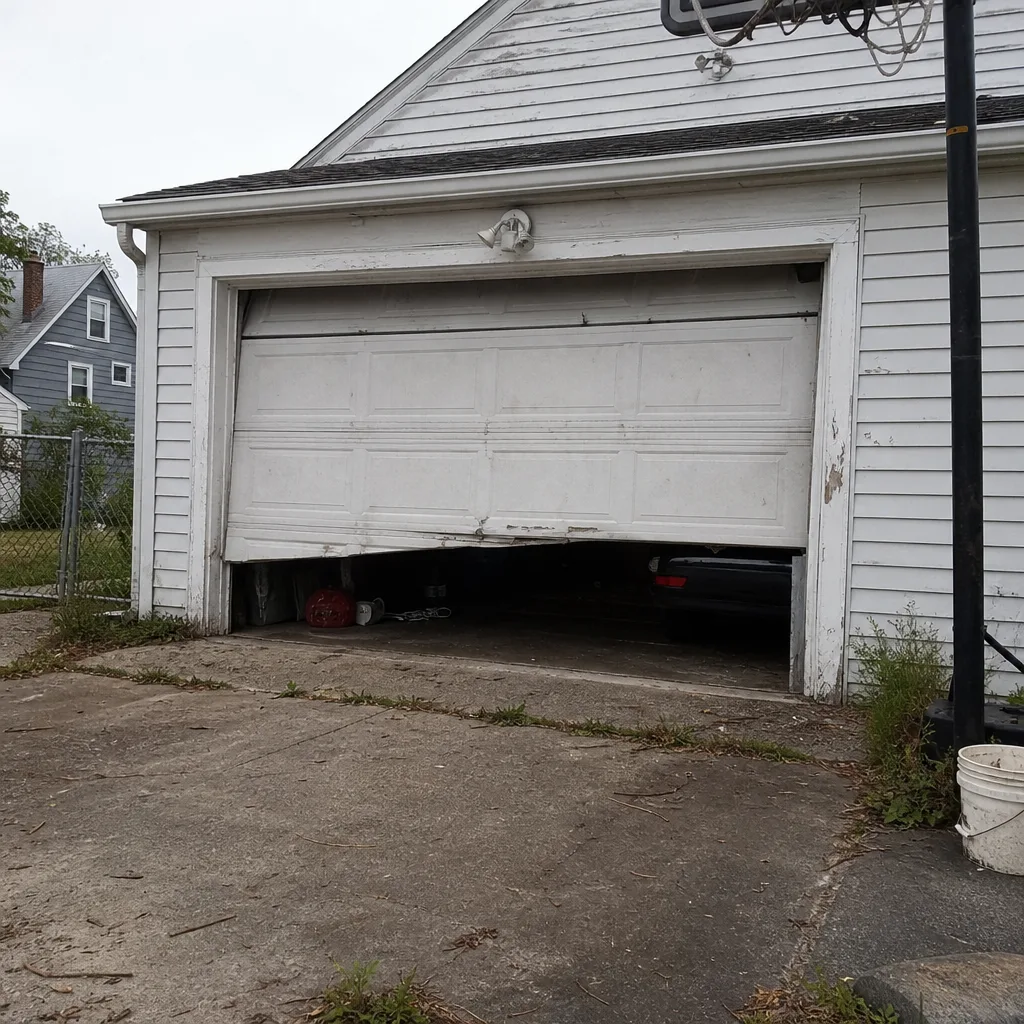
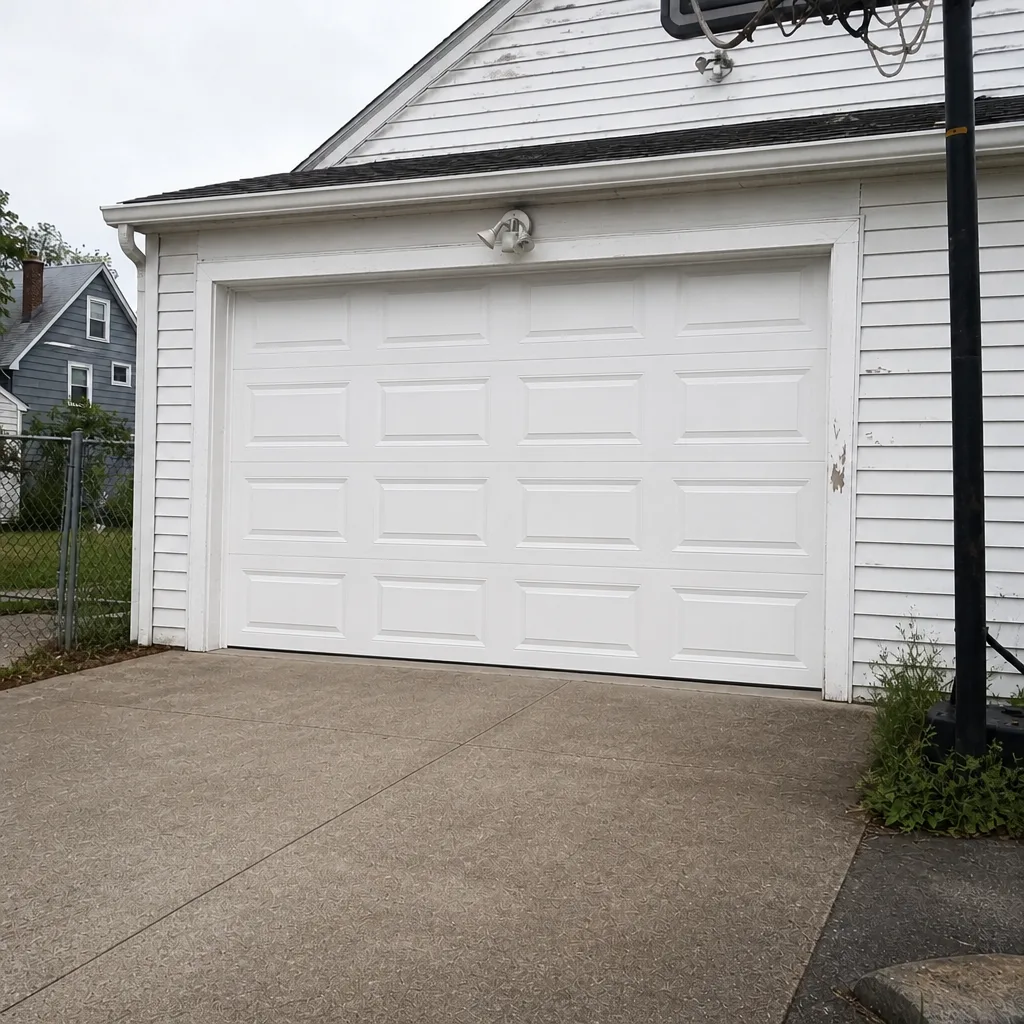
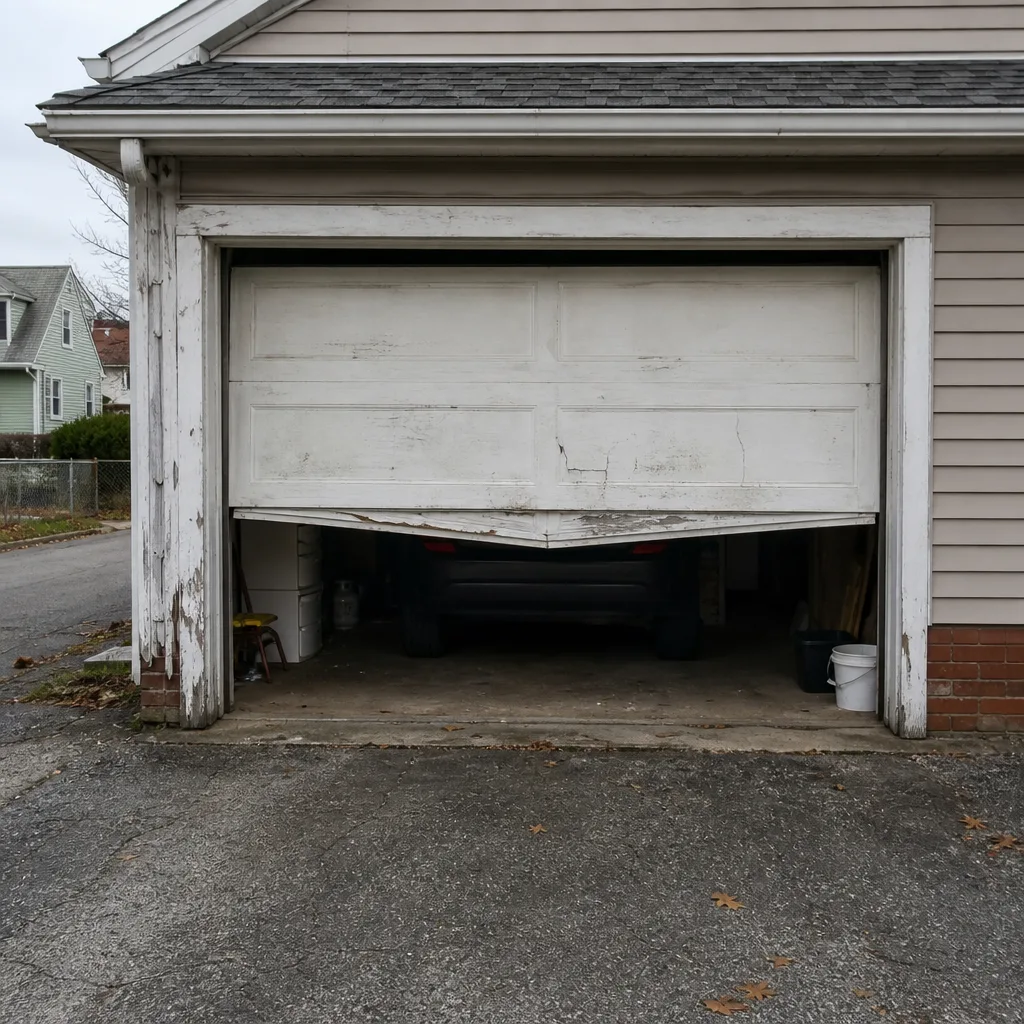
See the difference
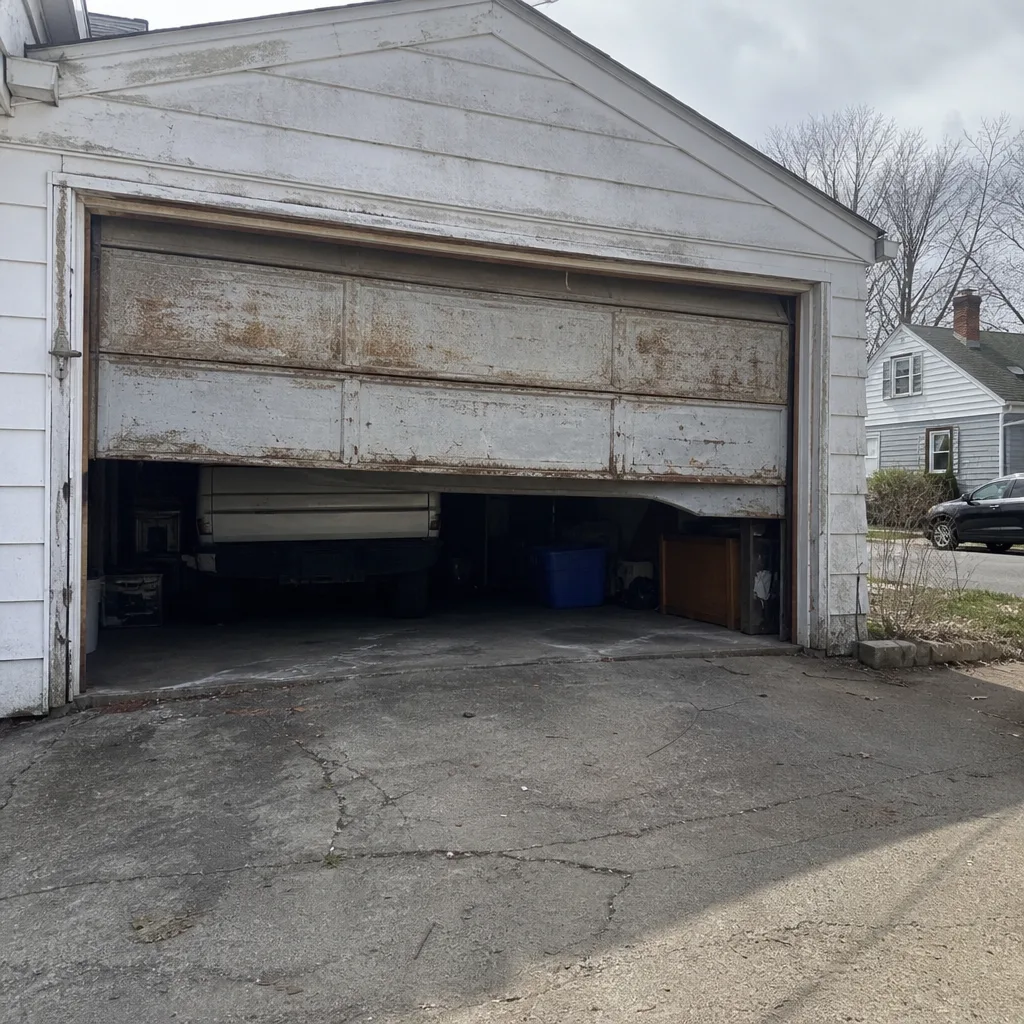 Before
 After
 Before
 After
 Before
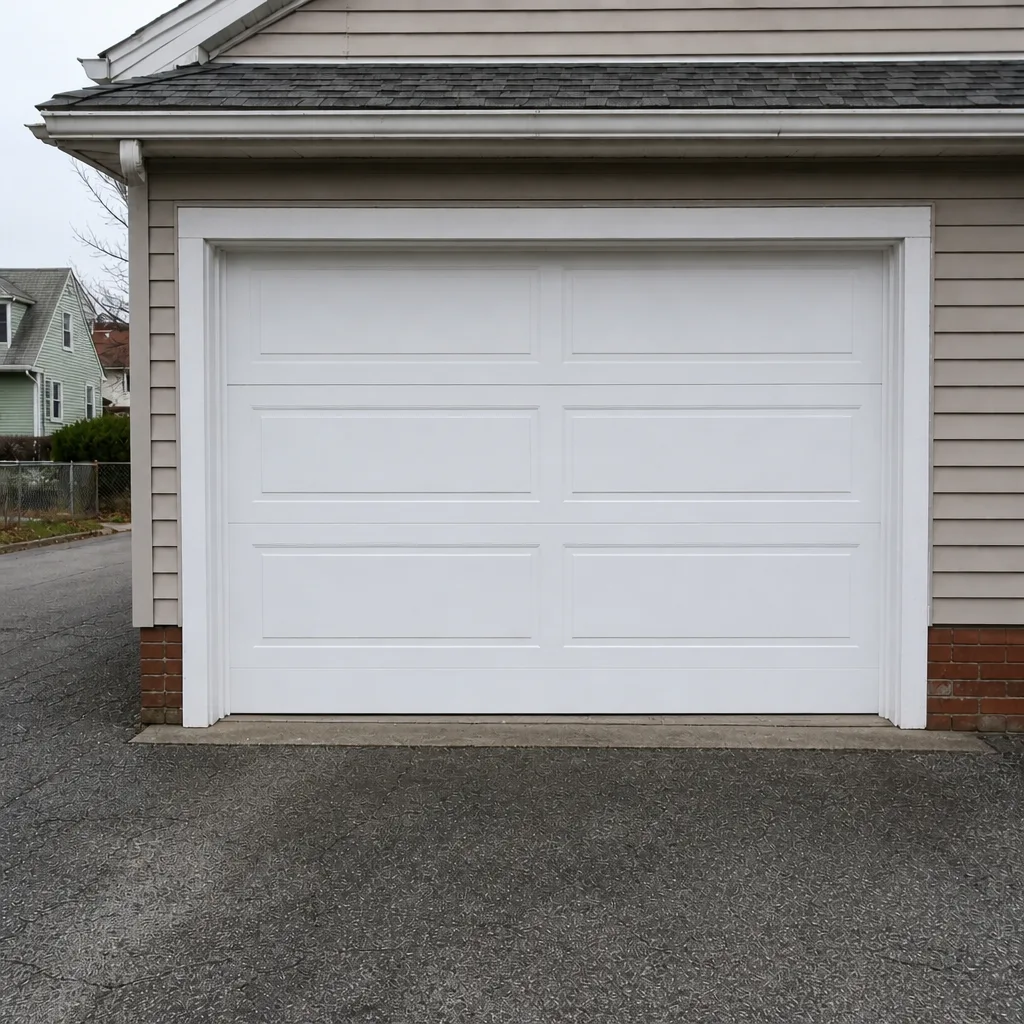 After
When to Call a Professional
Call a professional if the spring is broken, the cable is frayed or hanging, the door is off its track, or the door sits crooked. Call if the door is heavy to lift by hand, or if it doesn’t hold its position when you stop it halfway. Call if you’ve already tried a repair and the door still doesn’t work right, because undoing a first attempt is its own job. And call if you’re not sure which category you’re in, because a diagnostic visit costs less than a repair you have to do twice. Garage Door Repair Pawtucket offers free estimates in Pawtucket, and you can reach us for a written quote by calling (855) 658-5250.
Frequently Asked Questions
No, and this is the one task in the whole guide we’d say that flatly. A torsion spring stores the door’s full weight as energy, and releasing it safely requires winding bars and a turn count matched to your specific door. If you don’t own the tools and don’t know the measurement, you don’t own the job. Call (855) 658-5250 and we’ll give you a free estimate on spring repair.
A spring swap using a generic hardware-store spring. Springs are matched by weight and height, not width alone, and a slightly wrong spring holds for a while before it starts slamming or leaving the door half-open. If you’re in this situation, call us for a quote on the spring repair rather than a second attempt.
It can, if the work causes the failure, but the exact terms vary by manufacturer and product. Check the warranty booklet that came with your door or opener before touching a covered component. If you’re not sure what’s covered, a technician can help you sort it out during a service call, and estimates are free.
Most repairs in the area run in the standard range for this market, and the exact figure depends on the part and the door. We give a written estimate before any work starts, and the price on that estimate is the price. Call (855) 658-5250 for an exact quote, free of charge.
Usually yes, and it’s one of the safest DIY jobs on the list. Find the model number on the opener head, pull the manual, and follow the pairing sequence for that generation. If you can’t find the manual, or you’re trying to pair a smart opener and the app won’t cooperate, we can handle it during a service visit.
A door stuck open is a security situation, and we treat it as emergency garage door service. Don’t force the door or cut the spring, and try the manual release only if you can hold the door’s weight safely. Call (855) 658-5250 and we’ll assess it and give you a free estimate.
The Bottom Line
Garage door work sorts cleanly if you ask where the energy goes. Lubrication, sensor alignment, and remote programming are safe for a prepared homeowner and belong in your own hands. Springs, cables, tracks, and panel work carry stored or sudden force, and they need tools most households don’t own and shouldn’t improvise. The most expensive mistake isn’t the parts you buy: it’s the repair that has to be undone before it can be done right. If you’re in Pawtucket and you’re unsure which side of the line you’re on, start with a free estimate rather than a hardware store run. Our technicians have up to 9 years of experience, we work on the brands you own, and we’ll quote before we touch anything.
Garage Door Repair Pawtucket serves homeowners and residential property managers across the city with repair, spring work, opener service, installation, and emergency garage door service. We cover LiftMaster, Chamberlain, Genie, Clopay, Amarr, Wayne Dalton, Craftsman, and Raynor units, so we’re familiar with your hardware before we arrive. Call (855) 658-5250 for a free estimate.
Written by the team at Garage Door Repair Pawtucket.