Last updated November 23, 2026
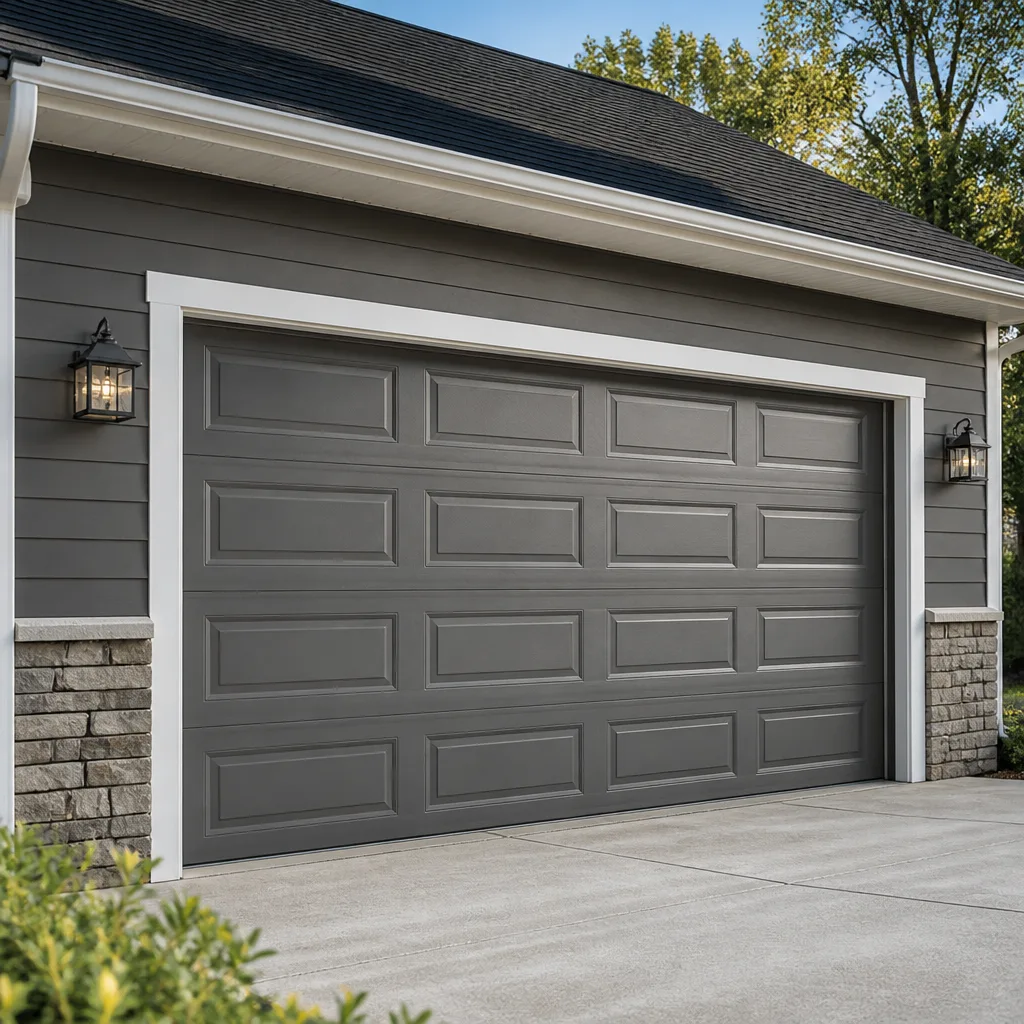 Raised-panel steel
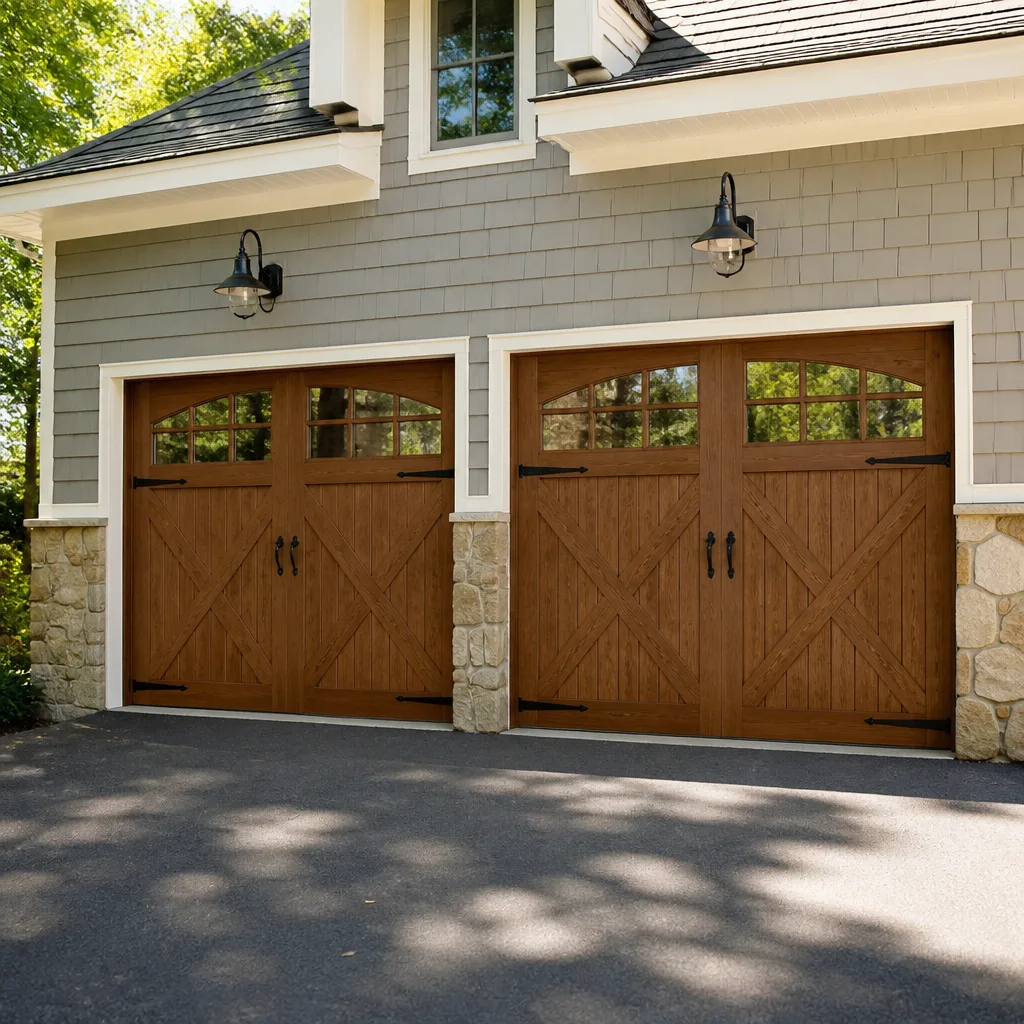 Carriage house
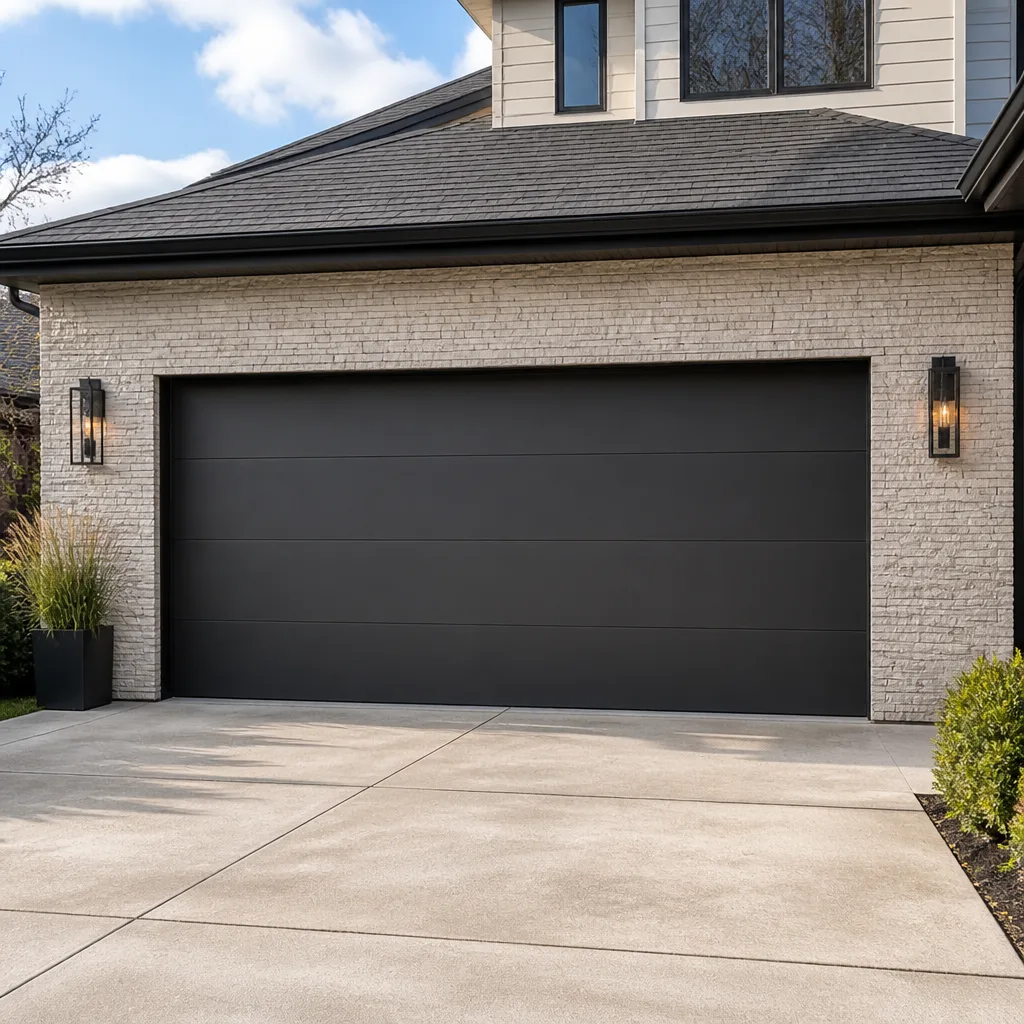 Modern flush
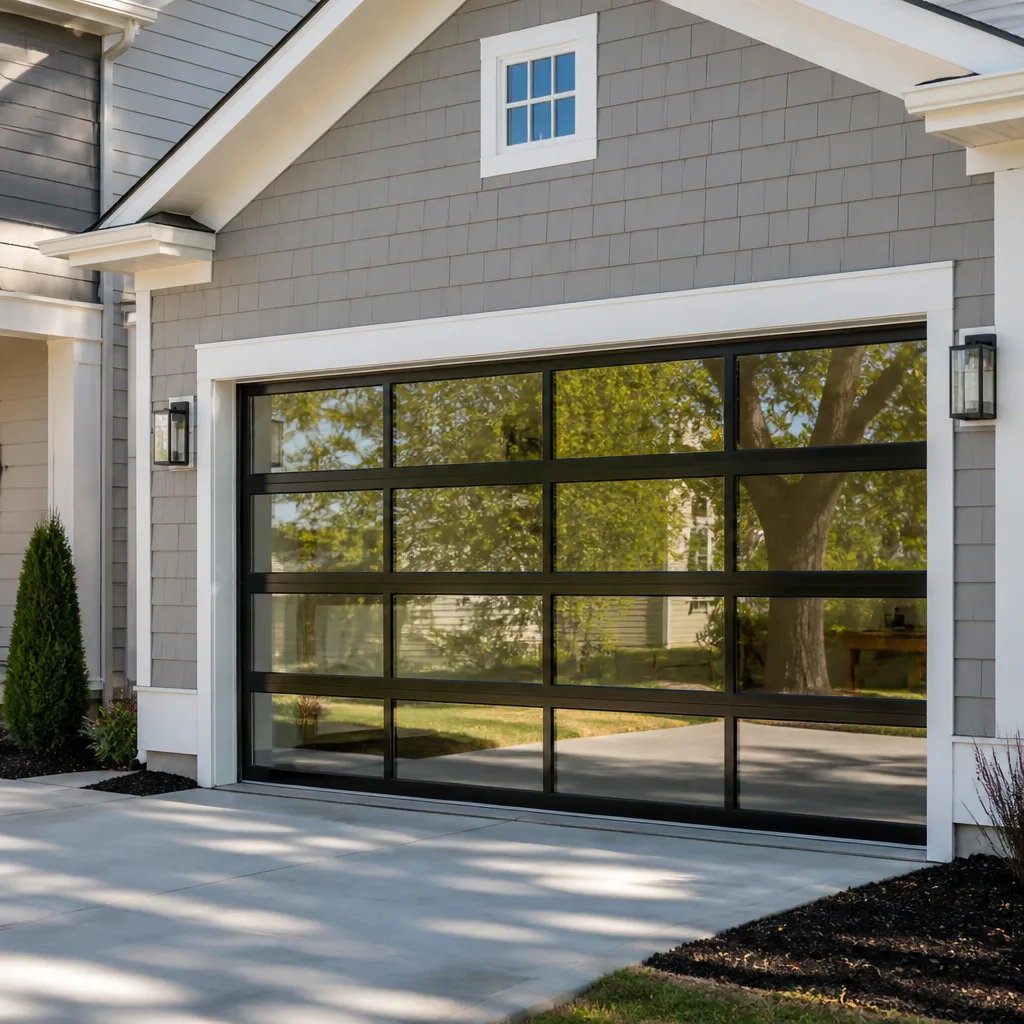 Full-view glass
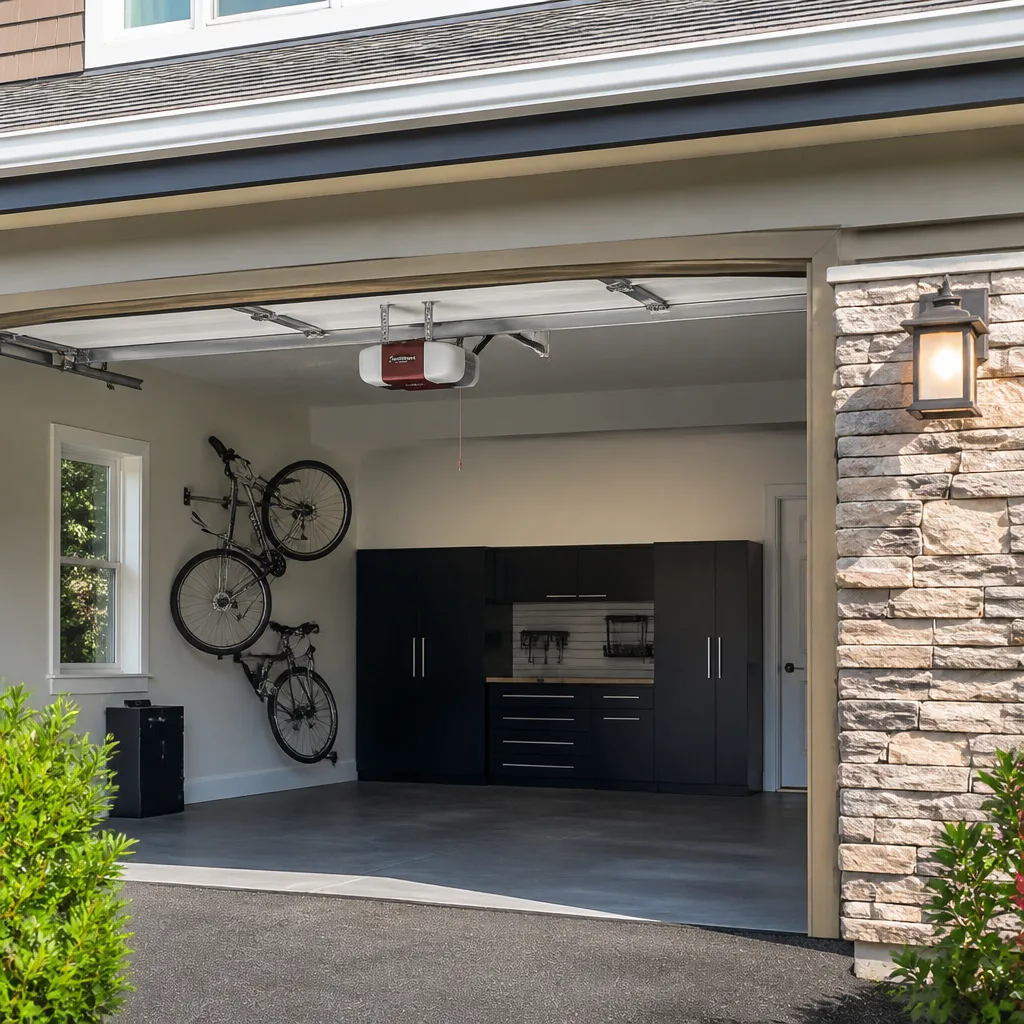 LiftMaster openers
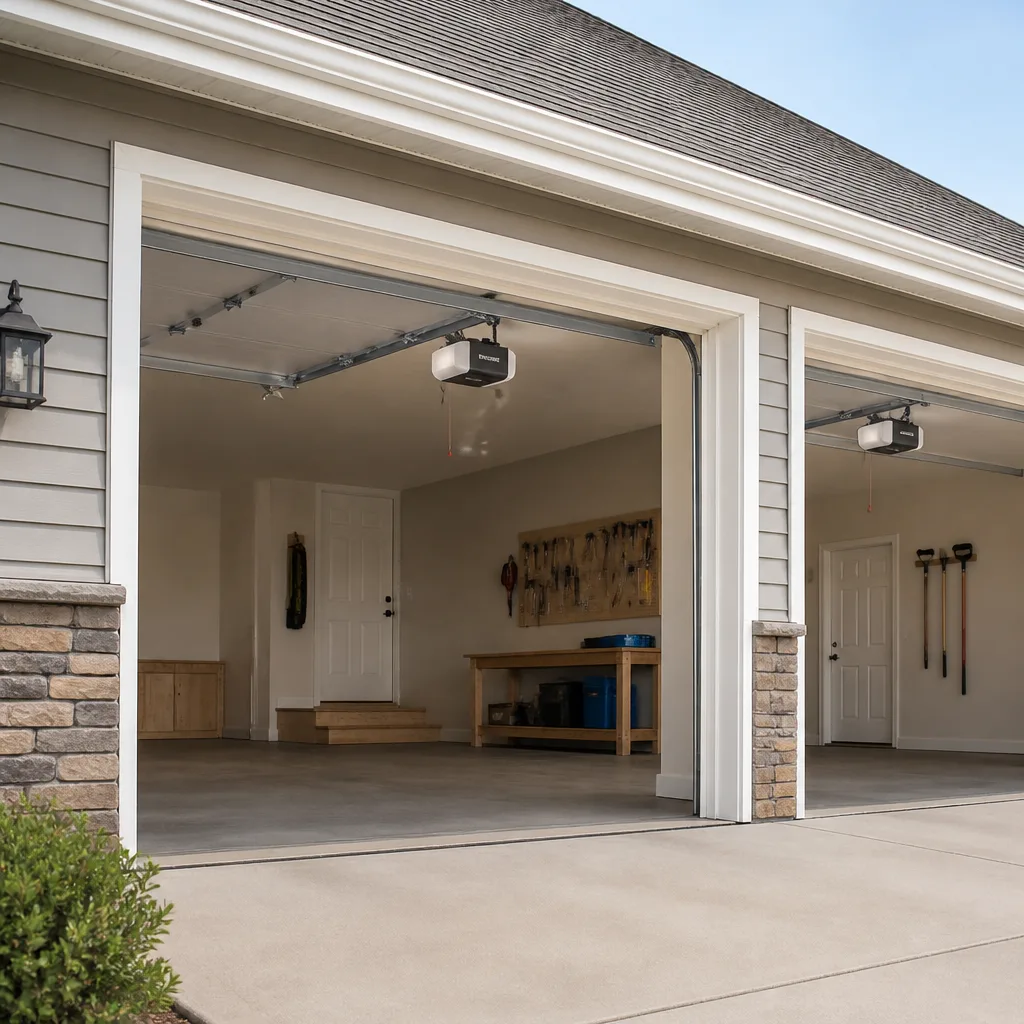 Chamberlain openers
Full 25-point door and opener safety check with every visit - springs, cables, rollers, tracks, and your LiftMaster or Chamberlain opener included
You get a price before we start. It does not change when the pro arrives.
Get your free estimateThe Complete Guide to Garage Doors in Pawtucket
Most garage door advice online assumes a house built for a two-car garage with a standard 16-foot opening. Pawtucket doesn’t work that way. A big share of the city’s homes went up before the modern attached garage was common, and plenty of what residents call a garage today was originally a carriage house, a workshop, or a storage shed that got converted later. That history shows up the moment you try to buy a door, replace a spring, or fit an opener: the opening isn’t standard, the ceiling is low, the driveway is shared, and the frame was never built for a 200-pound sectional. This guide covers how garage doors actually work in Pawtucket, from sizing to door types to the repair-versus-replace decision. If you need a fast answer, start with the quick answer below.
Quick Answer
A garage door in Pawtucket usually needs a custom-fit or carefully sized door because much of the city’s housing was built before standard garage dimensions existed, and Rhode Island’s freeze-thaw winters and humid summers put real stress on springs, cables, and weather seals. Panel swaps are cheaper when the frame and tracks are sound, while full replacement makes more sense when the opening is out of square or the door is at the end of its life. For anything involving springs or cables, call a trained technician rather than attempting it yourself.
Styles & brands we work with
- Raised-panel steel
- Carriage house
- Modern flush
- Full-view glass
- LiftMaster openers
- Chamberlain openers
Table of Contents
- How Pawtucket’s Older Housing Stock Shapes Door Sizing
- Which Door Types Hold Up Best in Rhode Island Weather
- Panel Swap vs. Full Replacement: What Makes Sense Here
- Opener Compatibility for Low Ceilings and Converted Garages
- How to Tell If Your Door Frame Is Structurally Sound
- What Garage Door Repair Actually Involves
- Why Spring Repair Is a Job for Trained Hands
- What Garage Door Work Typically Costs in Pawtucket
How Pawtucket’s Older Housing Stock Shapes Door Sizing
Pawtucket grew fast in the late 1800s and early 1900s, and a lot of the housing that stands today was built in that window. Dense triple-deckers, narrow lots, and detached outbuildings were the norm. The two-car attached garage with a wide, tall opening came later. That means a large percentage of the garages in this city were never built to a modern standard size, and a door ordered off a big-box shelf “standard 16 by 7” often won’t fit without modification.
What “custom fit” actually means in practice is less dramatic than it sounds. It usually comes down to a few measurements and adjustments:
- Opening width and height measured at several points, because older openings are rarely perfectly square.
- Headroom above the door, which decides whether a standard torsion setup will even clear a low ceiling.
- Side clearance for the vertical tracks, often tight in narrow driveways and shared alley access.
- Backroom behind the opening, which sets how far the door travels when it opens.
In our experience around Pawtucket, the fix for an out-of-square opening is often a combination of a slightly narrower door and a fresh wood or steel frame built square, rather than forcing a stock door to fit a crooked hole. If you’re working with a converted carriage house or a garage that always seems to bind, our garage door repair technicians can measure the opening and tell you what’s actually possible before you spend money on the wrong size.
Which Door Types Hold Up Best in Rhode Island Weather
Rhode Island sits in a freeze-thaw climate. Water gets into seams and behind weather seals, then freezes and expands overnight, then thaws by midday. Do that a few dozen times a winter and anything that lets moisture in starts to fail. Add humid summers and you have two enemies at once: ice jacking the frame in winter, and moisture warping wood or corroding hardware in summer. The door material you choose should account for both.
Raised panel steel doors
The most common choice, and for good reason in this climate. Steel with a factory finish resists moisture far better than wood, and the foam-core versions insulate well against cold. Look for a heavier-gauge skin and fully sealed sections; the seams are where ice does its damage.
Carriage-style doors
Popular on older Pawtucket homes for the period look, and they work well when built as steel with carriage overlays rather than true wood. A genuine wood carriage door is beautiful but needs annual sealing here to survive the winters. If you love the look, steel carriage is the lower-maintenance path.
Flush and modern panel doors
Clean and simple, flush doors leave fewer seams for water to exploit. They suit converted garages where a lower profile reads better against the house. Many come in aluminum or steel, both of which shrug off humidity.
Brands like Clopay and Amarr both offer profiles that fit older homes well, and we work with either. The bigger point is what’s behind the door: a well-sealed frame and adjustable bottom weather seal matter as much as the door itself when winters keep coming back.
Panel Swap vs. Full Replacement: What Makes Sense Here
This is the decision Pawtucket homeowners ask about most, and the answer almost always hinges on the frame and tracks rather than the panels themselves. If the opening is square, the tracks are straight, and the springs and cables are in decent shape, replacing a damaged panel is usually the sensible move. It costs less, and you keep a door that already fits a non-standard opening – which matters a lot in a city full of custom-size doors.
Full replacement starts to make more sense when:
- The door has multiple cracked or dented panels spread across the face, not just one localized hit.
- The tracks are bent or the opening is out of square, so a new panel would never sit flush.
- The existing door is wood that’s warped beyond repair, or hardware that’s rusted through.
- You want insulation, a quieter operation, or a different look that the old door can’t provide.
- The old panels can no longer be matched, which happens often on doors long out of production.
One local wrinkle: because many doors here are custom-sized, a “just swap one panel” plan can run into the same non-standard sizing problem. A technician can tell you whether the damaged section is a stock profile or something that has to be made to order. If you’re weighing this call yourself, our guide on Garage Door Repair Pawtucket walks through how repairs and replacements are scoped before any work starts, and the estimate you get is quoted and agreed before a single panel comes down.
Opener Compatibility for Low Ceilings and Converted Garages
Converted garages are everywhere in Pawtucket, and they come with a specific problem: low ceilings and limited headroom. A modern opener, especially a belt-drive unit, needs a certain amount of clearance above the door and behind the track. In a garage that was originally a shed or workshop, that clearance often isn’t there. The good news is that openers themselves don’t require a door of any particular make – they need space and the right rail setup, and there are ways to fit them into tight geometry.
What we check before recommending an opener:
- Headroom above the door for the torsion bar and spring assembly.
- Clearance for the rail and operator along the ceiling, which can be tight in low-ceiling conversions.
- Door weight and balance, because an opener only assists – it doesn’t compensate for a door that’s out of balance.
- Power and wiring near where the opener motor will sit.
If you already own a named brand, it helps to work with someone who knows that specific system. We service LiftMaster and Chamberlain units (including their smart-home myQ integration), Genie and Craftsman mechanical openers, and older legacy systems that other shops turn away from. If you want to know whether your existing unit can be repaired rather than swapped, our garage door opener repair page covers the troubleshooting side. Belt-drive units tend to run quieter in a low-ceiling garage, and screw-drive or chain-drive units are more forgiving of limited space depending on the door. The right call depends on your actual geometry, not a catalog spec.
How to Tell If Your Door Frame Is Structurally Sound
Before investing in a new door, it pays to know what condition the frame is in. A sturdy door hung on a rotten frame will sag, bind, and fail early – and the installer’s warranty won’t fix a frame problem the door can’t see. In older Pawtucket homes, frames that were never designed to carry the weight of a modern sectional door are the hidden risk.
Here’s what to look at, in order:
- Check the vertical and horizontal framing for soft spots. Poke the wood at the base with a screwdriver. If it gives easily or crumbles, that’s rot.
- Look for gaps where the frame meets the wall. Daylight or a visible seam usually means movement.
- Test the opening for square. Measure both diagonals corner to corner; if they differ noticeably, the opening has shifted.
- Examine the fasteners. Rusted or loose lag bolts in the jamb tell you the frame has been working under load.
- Check the header above the opening. A sagging header means the structure above is settling and needs attention before a new door goes up.
If any of those raise a flag, the frame usually needs repair or replacement before a door. That’s the kind of thing a technician can confirm in a short visit, and it’s worth knowing before you order. Because the frame has to be sound, a full replacement is often scheduled rather than done on the spot: it’s measured, ordered, and installed once the opening is ready. A free measure and a written price come first.
What Garage Door Repair Actually Involves
A garage door looks simple from the driveway. In practice it’s a balanced mechanical system, and a handful of parts do most of the work. Understand the parts and the repair conversation gets a lot clearer.
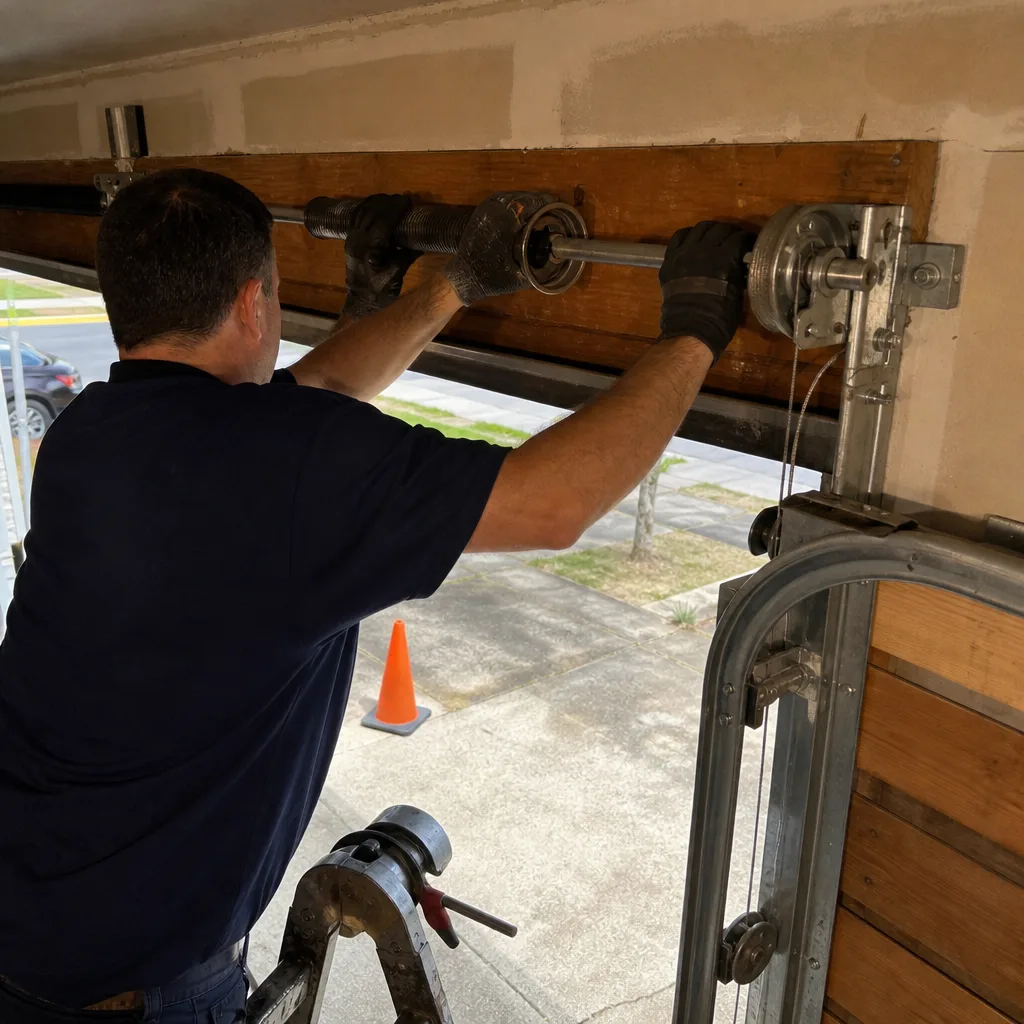
- Springs counterbalance the door’s weight. Torsion springs run on a shaft above the door; extension springs run along the horizontal tracks.
- Cables connect the springs to the bottom corners and wind onto drums as the door travels.
- Rollers and hinges let the sections articulate as the door turns the corner from vertical to horizontal.
- Tracks guide the door, and alignment is everything.
- The opener only lifts an already-balanced door. It’s not meant to fight a heavy or binding door.
Most repairs come down to one of these failing. A door that’s suddenly heavy, or one that slams rather than settling gently, usually has a spring or cable issue. A door that jumps, screeches, or comes off its track points to rollers, hinges, or alignment. An opener that runs but the door doesn’t move often means a broken spring the opener can’t lift. And because so many Pawtucket homes have older doors with non-standard hardware, parts matching matters – a technician who knows the door and opener brands can often get the right part the first time and avoid the “we’ll have to come back” loop.
For a door that’s stuck open, half-closed, or off its track, emergency service is a real option here, not an upsell. If the door won’t close and the house is exposed, call and we’ll get you scheduled for the soonest available visit.
Why Spring Repair Is a Job for Trained Hands
Garage door springs are under extreme tension – enough to cause serious injury if handled wrong. This is the one part of the door we genuinely discourage homeowners from touching. The spring stores the energy that lifts the door; when it lets go, it lets go violently. We say this not to scare you off repair, but because a trained technician has the right tools, the right winding bars, and the safety practices to do the job without putting anyone at risk.
Signs you need a spring looked at:
- The door feels very heavy when you lift it by hand and won’t stay up halfway.
- A loud bang came from the garage and the door now won’t open.
- You can see a gap in the spring coil, or the spring looks stretched and twisted.
- The door opens a few inches and stops, with the opener straining.
- The door comes down too fast or too hard when closing.
Springs often come as a matched pair, and replacing both together is the usual recommendation so they wear evenly and the door stays balanced. Our garage door spring repair work starts with a balance check and a measured look at the door’s weight, because a new spring matched to the wrong door just repeats the failure. This is where brand and system knowledge really helps: the spring, cable, and drum setup differs between a Clopay, Amarr, or Wayne Dalton door, and our technicians have up to 9 years of experience reading those differences.
What Garage Door Work Typically Costs in Pawtucket
Pricing for garage door work depends on the job, the door size, and the parts involved, so the ranges below are typical estimates, not a fixed price. The written estimate you receive is what sets the final number, and it’s quoted and agreed before any work starts. That matters more on a garage door than on most home projects, because the second worry after “what will this cost” is “will the invoice come in higher than the quote.” It won’t – the written price is the price.
| Service | Typical estimated range |
|---|---|
| Spring repair (one spring; a matched pair costs about twice this) | $180 – $340 |
| Opener repair | $120 – $280 |
| New opener installation | $250 – $600 |
| Panel replacement | $250 – $750 |
| Full door installation (single-car) | $1,100 – $2,000 |
| Full door installation (double-car) | $1,800 – $3,200 |
These are ballpark figures. A custom-sized door for an older Pawtucket opening can run higher than a stock door, and a door with upgraded insulation or carriage detailing will also sit toward the top of the range. The best way to get a true number is a free measure. We’ll look at the frame, the opening, and the door together, then give you a written price you can decide on without pressure. Call (855) 658-5250 for a free estimate.
Common Mistakes to Avoid
- Ordering a stock-size door for a non-standard opening. Pawtucket’s older garages are rarely a true 16 by 7, and forcing a stock door into a crooked opening causes binding from day one. Measure twice and let a technician confirm the opening before you buy.
- Replacing only one spring in a paired setup. The old spring has already taken most of the wear, so pairing a new one with a used one wears both unevenly. Replace the matched pair together.
- Ignoring a noisy door until it fails. Squeaks and grinds are usually cheap fixes early on – lubrication, a roller, a hinge – and expensive ones later.
- Assuming a new opener will fix a heavy door. If the door is out of balance, the opener is only straining harder. Fix the door first; the opener will follow.
- Hanging a new door on a soft frame. A rotten jamb or a sagging header will undermine any door you install on it. Check the structure before you order.
- Trying to wind a spring yourself. The stored energy is genuinely dangerous and the tools aren’t things most homeowners own. This is the one repair that should always go to a trained technician.
- Overlooking the bottom weather seal. In freeze-thaw winters, a torn bottom seal lets water and ice in, and that’s where frame rot starts. Replace it when it cracks.
See the difference
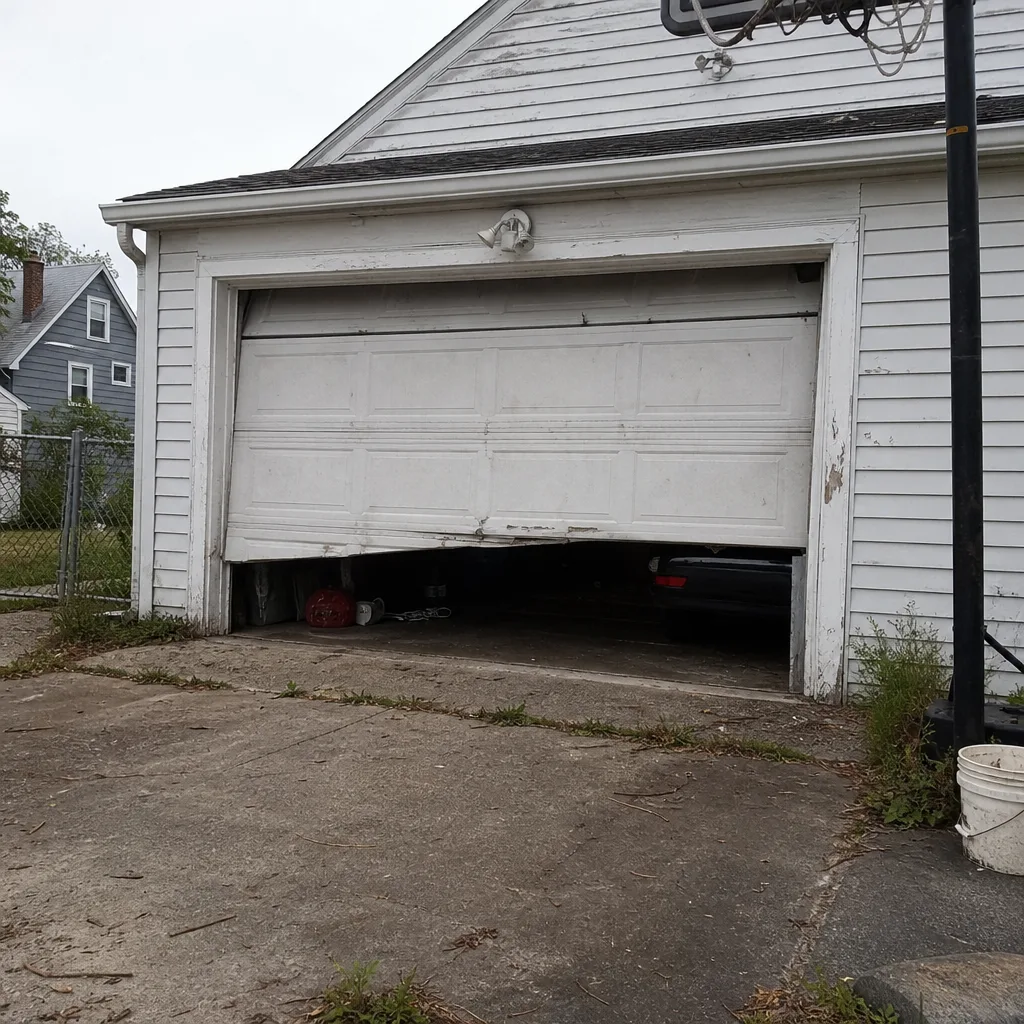
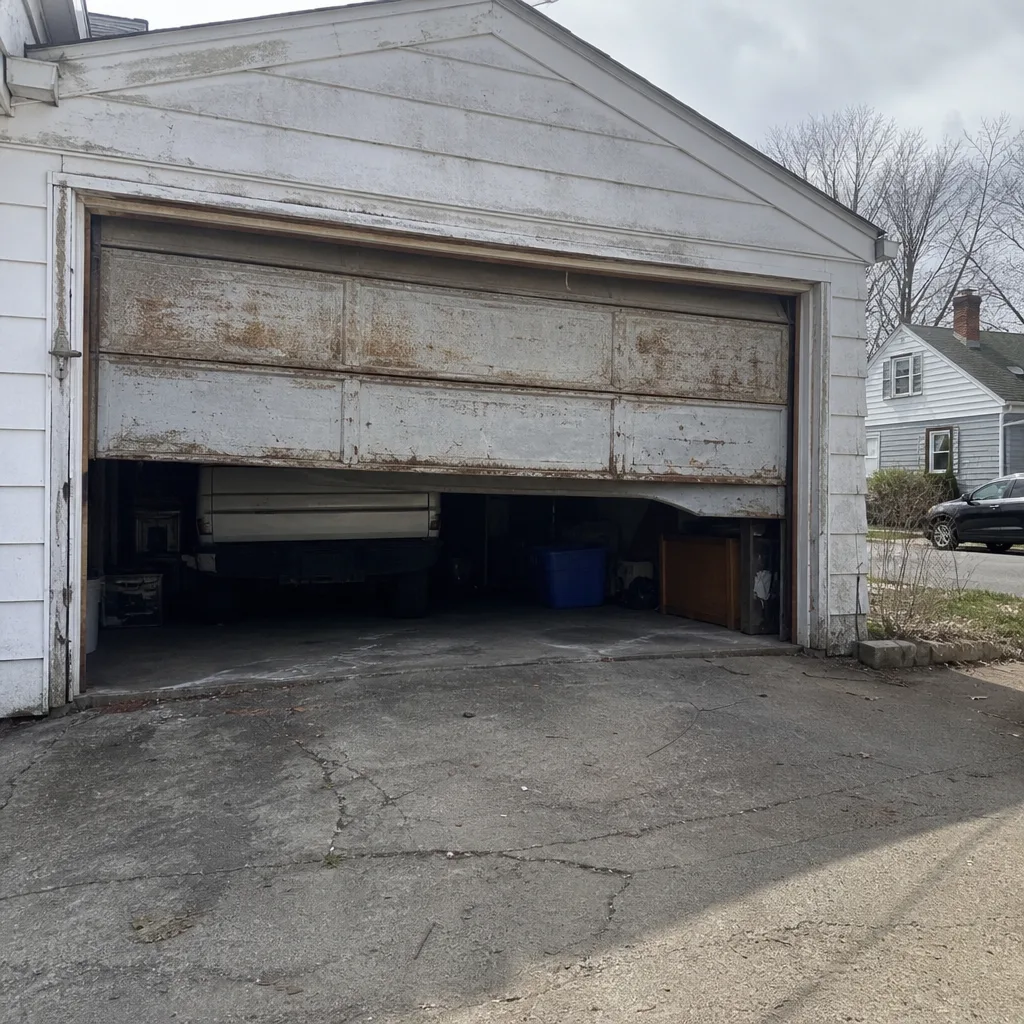 Before
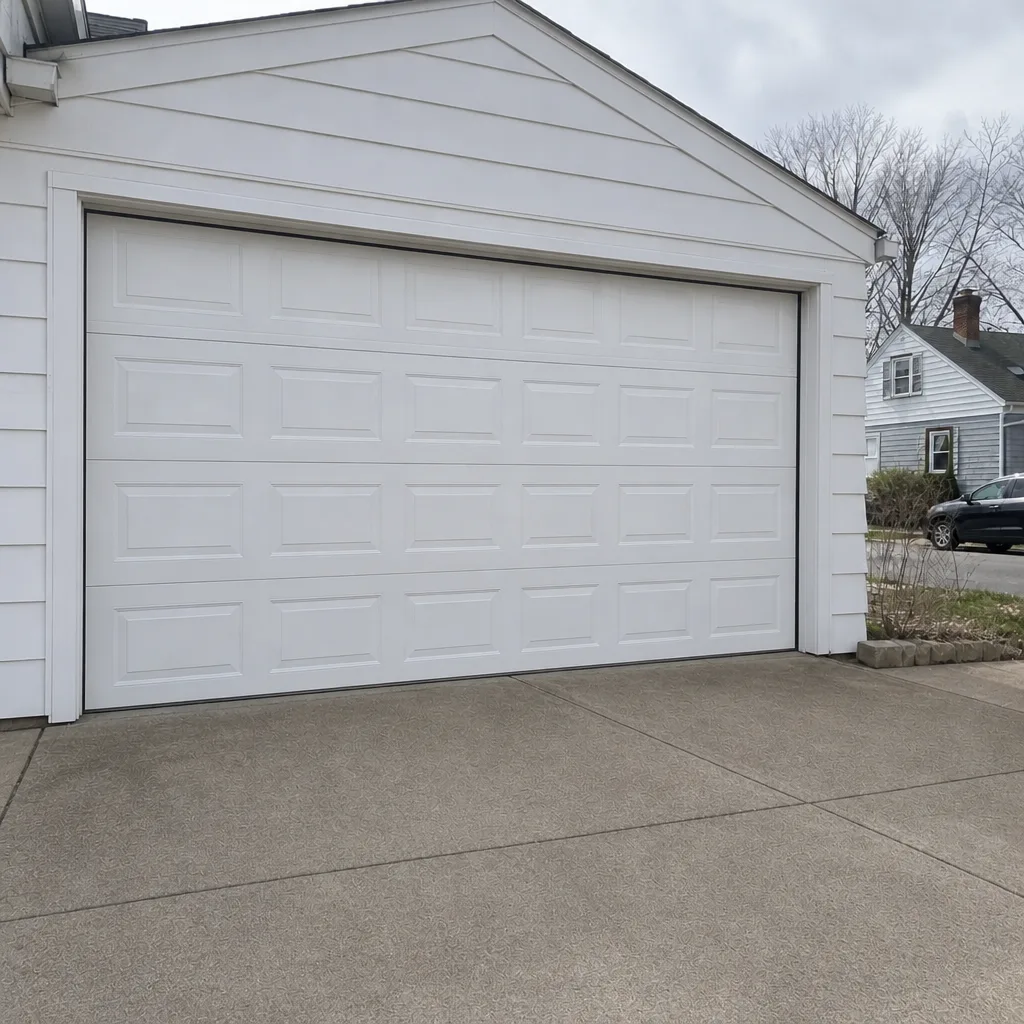 After
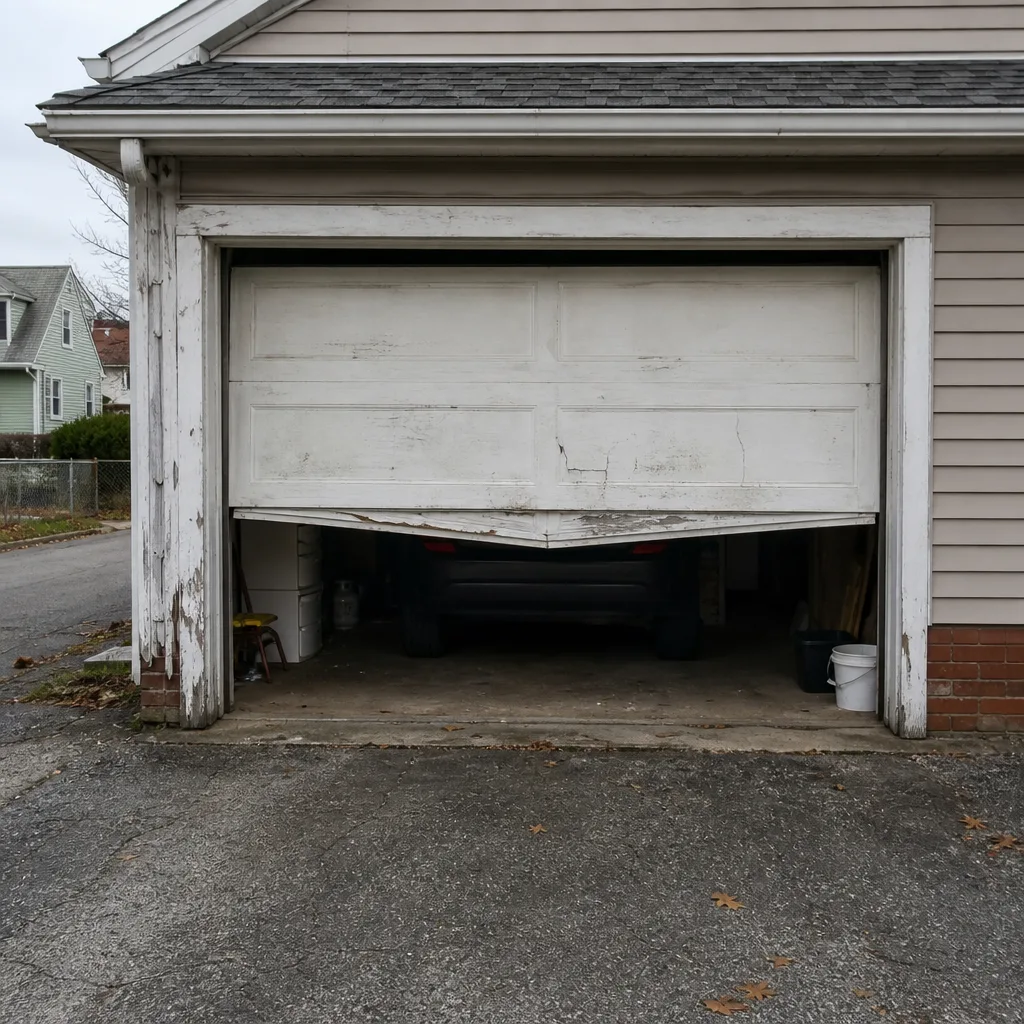
 Before
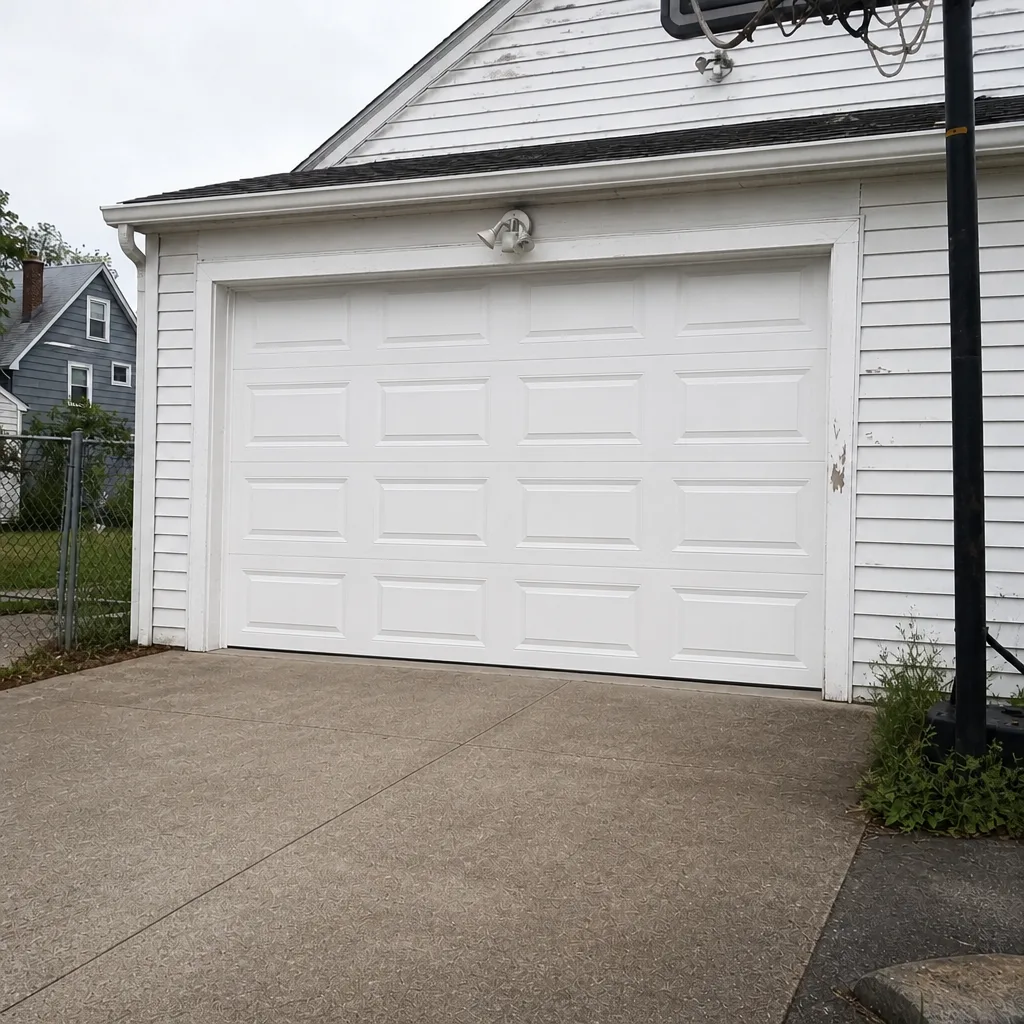 After
 Before
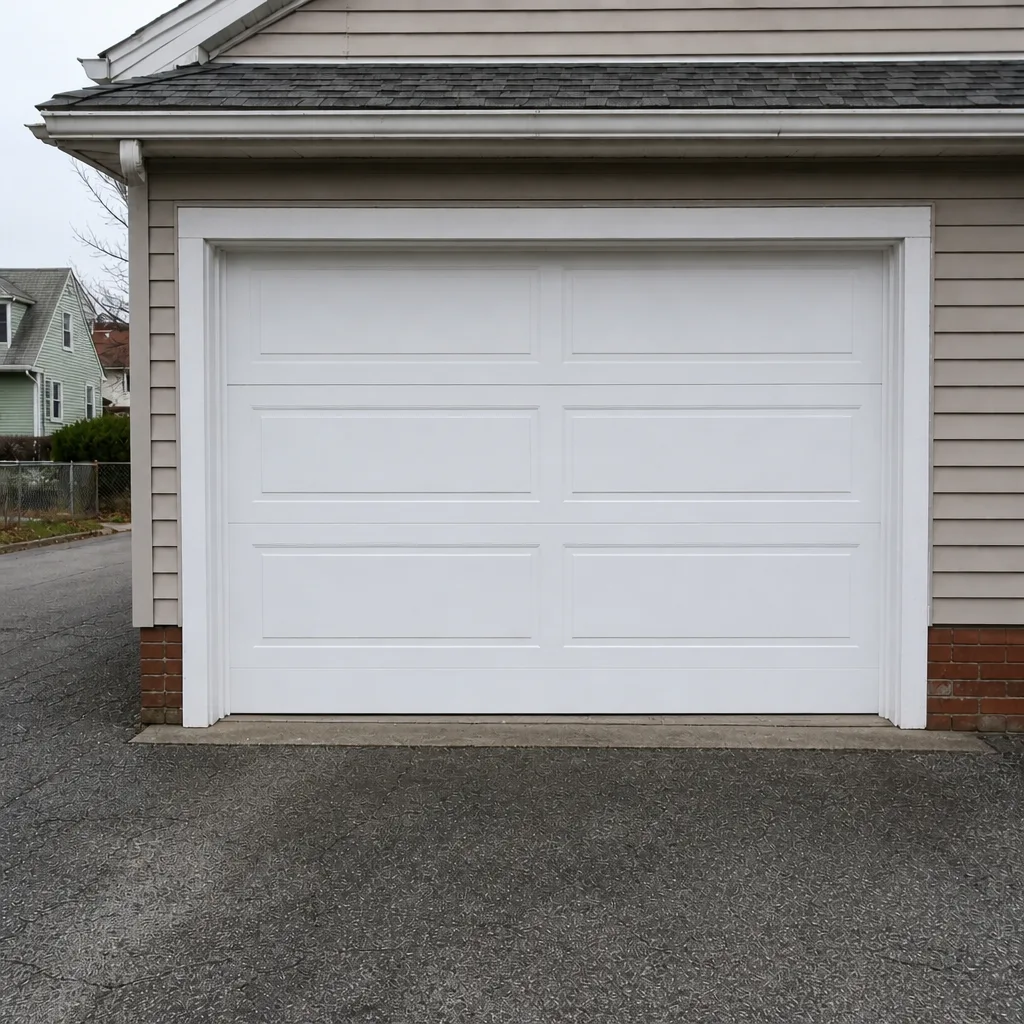 After
When to Call a Professional
Some garage door problems can wait for a scheduled visit. Others shouldn’t. Call a professional when the door has dropped suddenly, when a spring has visibly failed, when the door is off its track or stuck partway, or when the opener strains against a door that’s too heavy. Those are the situations where a residential specialist matters most, and where an emergency visit is worth arranging rather than waiting. If your garage is the only access to the house, or the door won’t close and leaves the house exposed, treat it as urgent. On the other side, a noisy door, a worn bottom seal, a single cracked panel, or a slow opener can be scheduled and priced without rush. Garage Door Repair Pawtucket offers free estimates in Pawtucket – call (855) 658-5250 to get a written price before any work begins.
Frequently Asked Questions
Usually yes, or a carefully sized door rather than a stock one, because much of the city’s housing was built before standard garage dimensions existed. A technician can measure the opening and tell you whether a standard door will fit or a made-to-size door is the better route. Call (855) 658-5250 for a free measure and a written price.
Most garage door repairs in Pawtucket run roughly $120 to $340 depending on the part, with spring repair typically $180 to $340 for a single spring (a matched pair costs about twice that). The written estimate sets the final price and is agreed before any work starts. Call (855) 658-5250 for an exact quote – estimates are free.
Often yes – emergency garage door service is available for situations that can’t wait, including broken springs, doors stuck open or off their tracks. Call (855) 658-5250 and we’ll book the soonest available visit. The price is still quoted and agreed before work begins.
No – the price is quoted and agreed before any work starts, so the written estimate is the number you pay. We look at the frame, the door, and the parts first so the quote reflects what the job actually needs. Call (855) 658-5250 to schedule a free estimate.
Yes – the local professional we connect you with is licensed and insured as their state and local requirements dictate. Our technicians who handle the work have up to 9 years of experience with door and opener systems. Call (855) 658-5250 to talk through your situation.
We service the major opener brands, including LiftMaster, Chamberlain, Genie, and Craftsman, and many older units can be repaired rather than replaced. A technician will check the door balance first, because an unbalanced door strains any opener. Call (855) 658-5250 to schedule a repair assessment.
The Bottom Line
Garage doors in Pawtucket are shaped by the city’s own history: older homes, non-standard openings, low-ceiling conversions, and shared driveways that force real decisions about what will fit and what won’t. The practical takeaways are simple. Measure before you order. Swap a single panel when the frame and tracks are sound, and replace the full door when they aren’t. Keep an eye on the frame and the bottom seal through the freeze-thaw winters. And for springs, cables, and off-track doors, leave it to trained hands. If you take one thing from this guide, let it be that a written estimate before work starts protects you at every step.
Contact
If you’re ready to get a real number for your door, call Garage Door Repair Pawtucket at (855) 658-5250 for a free estimate. We’ll look at the opening, the frame, and the door together, then give you a written price you can decide on. Same-day and emergency service is available when a door can’t wait.
Written by the team at Garage Door Repair Pawtucket.